TRANSPARENCY OF EMPTINESS
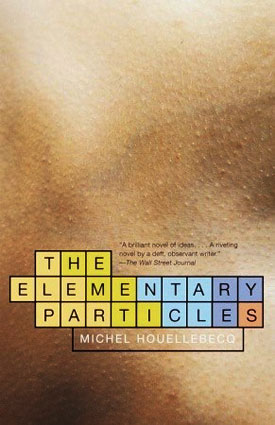
Transparency of Emptines is a solo performance by Monika Wachowicz inspired by the prose and philosophy of existence by Michel Houellebecq. The performance in terms of style is a project from the border of postdramatic theatre, performance art and dance theatre.
"There is no endless silence of infinite space, for in reality there is no space, no silence and no void. The world we know, the world we create, the human world, is as round, smooth, simple and warm as a woman's breast."
Michel Huellebecq, The Elementary Particles
----------------------------------------------------------------------------------------------------
script, stage moving and direction: Marcin Herich
script co-operation, stage moving and acting: Monika Wachowicz
fragments of texts: The Elementary Particles by M. Huellebecq, The Possibility of an Island by M. Huellebecq, Lullaby by Ch. Palahniuk
music: Funerallies by Franz Liszt
text: fragments of novels The Elementary Particles and The Possibility of an Island by Michel Huellebecq and Lullaby by Chuck Palahniuk
duration of the performance: 55 minutes
----------------------------------------------------------------------------------------------------
ABOUT THE PERFORMANCE:
Monika Wachowicz, aka Thinking Reed in a new solo by A Part, must have been born with the mysterious depth of yugen (one of the aesthetic concepts in Noh). Never the same and always true, in her latest appearance she is frightened of Pascalian "eternal silence of infinite spaces", but far from despair. She saturates emptiness with her gaze of the Eye of Providence - a triangle whose base is the stage while her legs, spread above the spotlight, are its sides. And the words from the motto in her mouth do things; cold and nude space is getting warm and full just like a woman's breast from The Elementary Particles by Houellebecq. For example, dancing chairs. Just like Kulmowa's horse-like chairs in the book for children, the chairs onstage become alive under Monika's magical touch, and trigger all kinds of associations. Needless to say, Ionesco. However, in contrast to the empty chairs of the master of absurd, symbolising absence of those who are and will be gone, the True Laugher's, or Herich's chairs cause neither fear nor grief. As they, and the audience, are embraced by Wachowicz. She is partly like an angel from Pina Bausch's Café Müller. she safeguards the falls of dancing night-walkers, that is, Herich's chair-like creatures, by erecting onstage their kurgans, pyramids and graves. In her movement, there is also Martha Graham sitting alone on a bench in Lamentation. Wachowicz contracts and releases herself in the corset of time - tight jeans and turtle-neck. However, she will not abandon the costume. How could she? It is her (second) skin, after all. In Herich's performance, this costume, i.e., the body, though it fails, as it wears out and limits time and space - grows (sic!) metaphysical; it is the body that guarantees contact with the Mystery, by dying, actually.
Monika Gorzelak, pisarze.pl, 2013 [Katowice, Poland]
How to put it... how does one kill oneself? Marcin and Michał create a theatre of absurd together. Both artists are cynics, troublemakers and scandal mongers. They face up to human deficiencies. They deal with infirmity brutally and bluntly. They're not above the futility of civilisation and bestialised naturalness. Jean Paul Sartre - contemporary French thinker, author of a theory of the decline-of-the-West sort, presents the process of our demise. Of universal self-annihilation. Nothing has changed in this respect ever since humans came into existence. Anyone who is alive is constantly dying.
Initially, it was like in a mirror. Perfect. The smooth surface, reflecting light, constituted a container covered with cling foil. The box of the arena was opened. Mirror images appeared in rows. On the one side of the theatrical table - the scene - viewers were seated. On the other side, the invisible characters - viewer-actors. The motif of empty chairs (visible from the viewer side) invoked the situation of boredom caused by (empty) life, a constant element of the mundane setting of the tragic farce (E. Ionesco). The chair installation at times took the form of an "impossible monument". Outdoor sculpture by Tadeusz Kantor was recreated. The setting was simple. Peace and quiet reigned. On the scene of life - the arena of the world - man has appeared and destroyed everything. Then he had to rebuild what was destroyed. This required thinking. Why does the creature who's not right in his mind want to set everything just right? Falling into a vicious circle and in desperation (a)rising anew. Maniacally chasing after, striving for, who knows what. What for? No heaven in that mind. Death is the order of being.
Action: Man exposed to ridicule. Embarrassing situation. Laughter turns into crying. Thin line. Laughter - "sudden, violent deformation of facial features, in one instant stripping the face of all dignity. If human beings laugh, if they are the only ones in the animal kingdom
affirming this monstrous facial deformation, this is also because they are the only ones to transcend the egoism of animal nature, achieving the horrifying superior stadium of cruelty" (M. Houellebecq, The Possibility of an Island).
Crying, "as a manifestation of human cruelty, since tears in this species appear to be connected with cruelty. We never cry only for ourselves. These two feelings, cruelty and compassion clearly make little sense in conditions of absolute solitude in which our lives take place" (M. Houellebecq, The Possibility of an Island).
Punchline: "Every living creature deserves sympathy for the simple reason that it's alive"
(M. Houellebecq, The Possibility of an Island).
Reaction: Big applause!
Agata Goraj, Portal Katowicki, 2013 [Katowice, Poland]
PRESENTATIONS
21 of Nov 2013 - Teatr A Part Studio (Katowice) - first night performance
22-23 of Nov; 7-8 and 13 of Dec 2013; 10 of Jan 2014 - Teatr A Part Studio (Katowice)
10 of June 2014 - Cultural Centre of Katowice - Int. Performing Arts Festival A Part
14 of Dec 2014 - Planet Cinema (Katowice) - Experiment Houellebecq
23 of Oct 2015 - Teatr Rozrywki in Chorzów - Metavera Art Festival