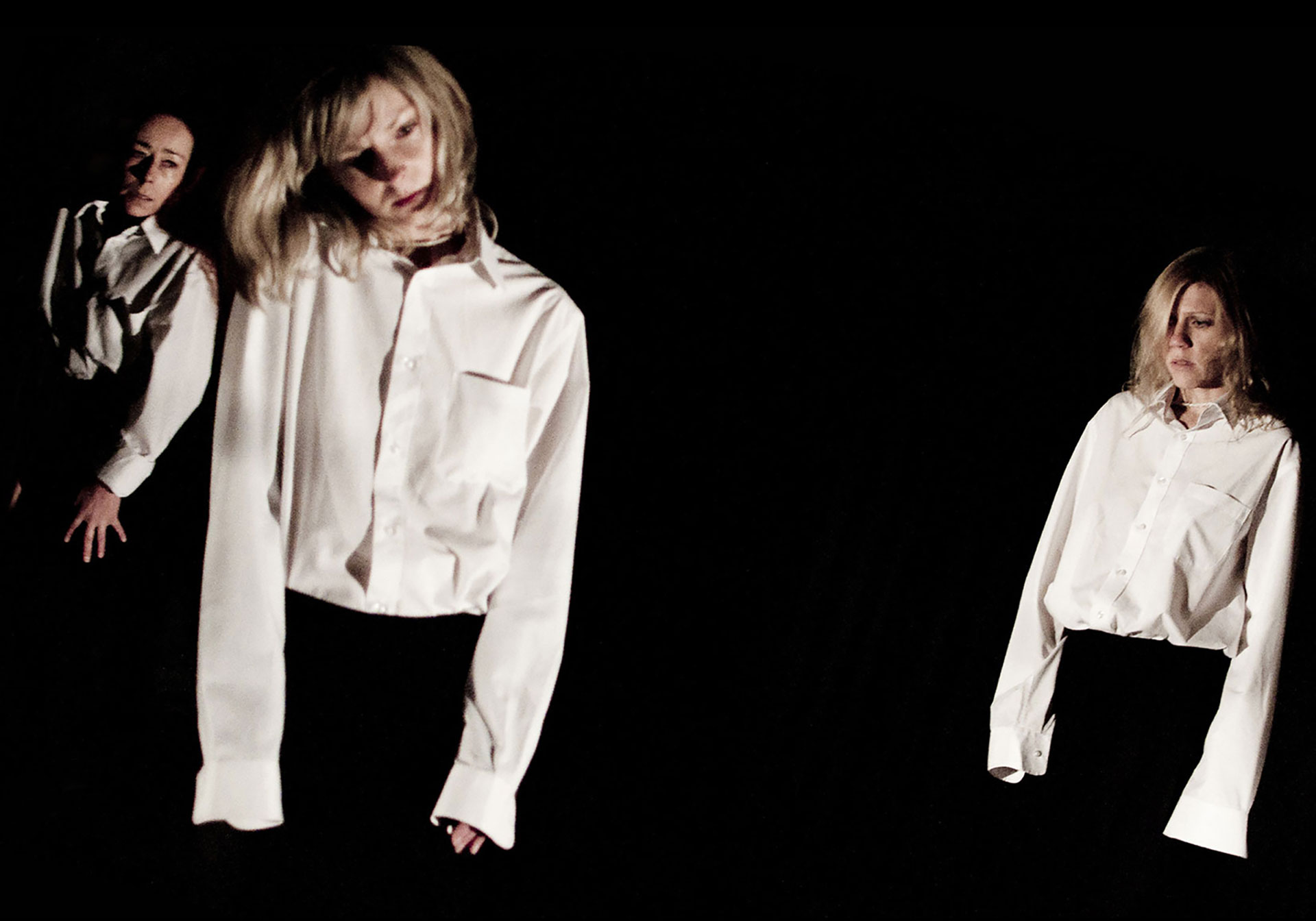
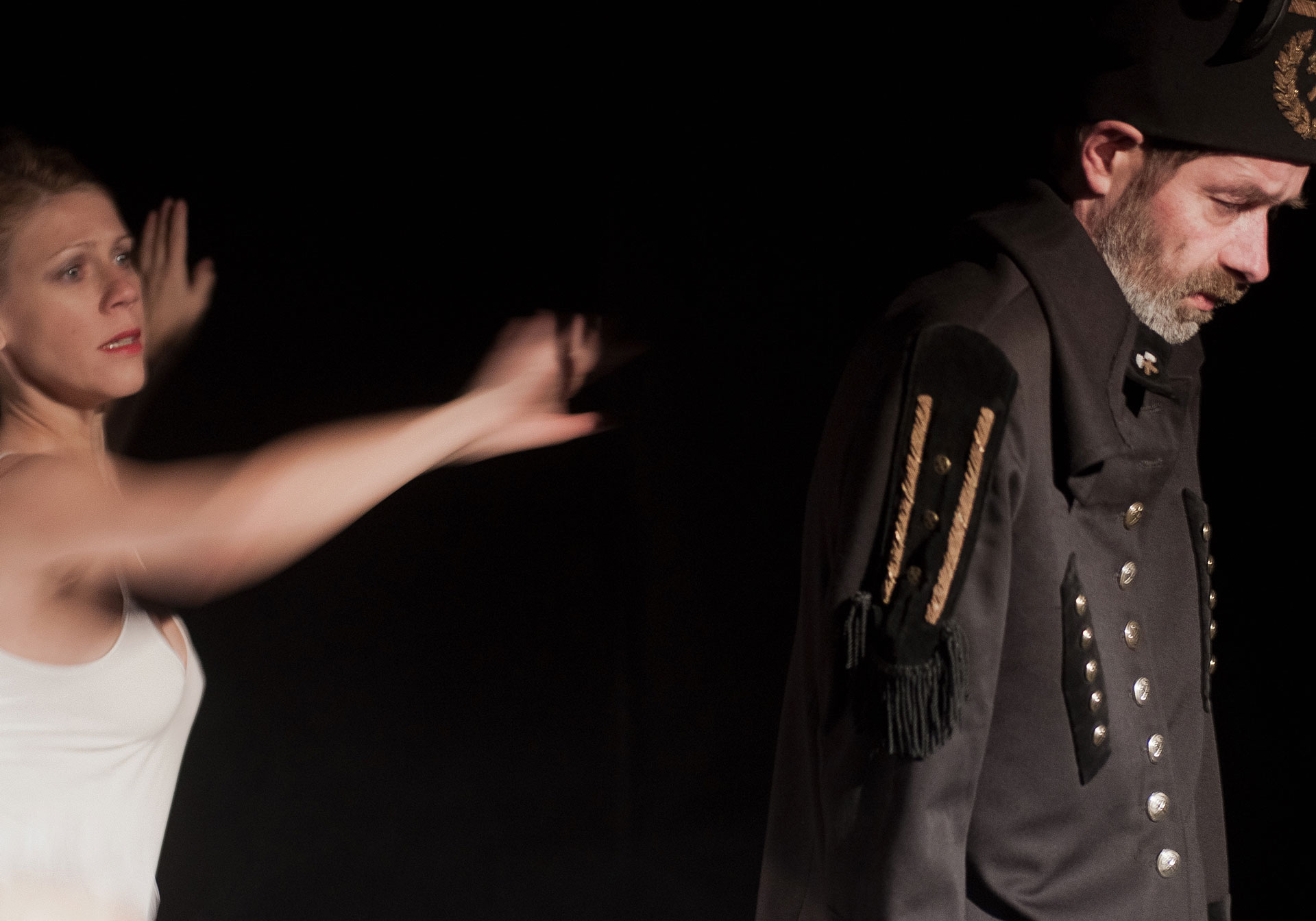
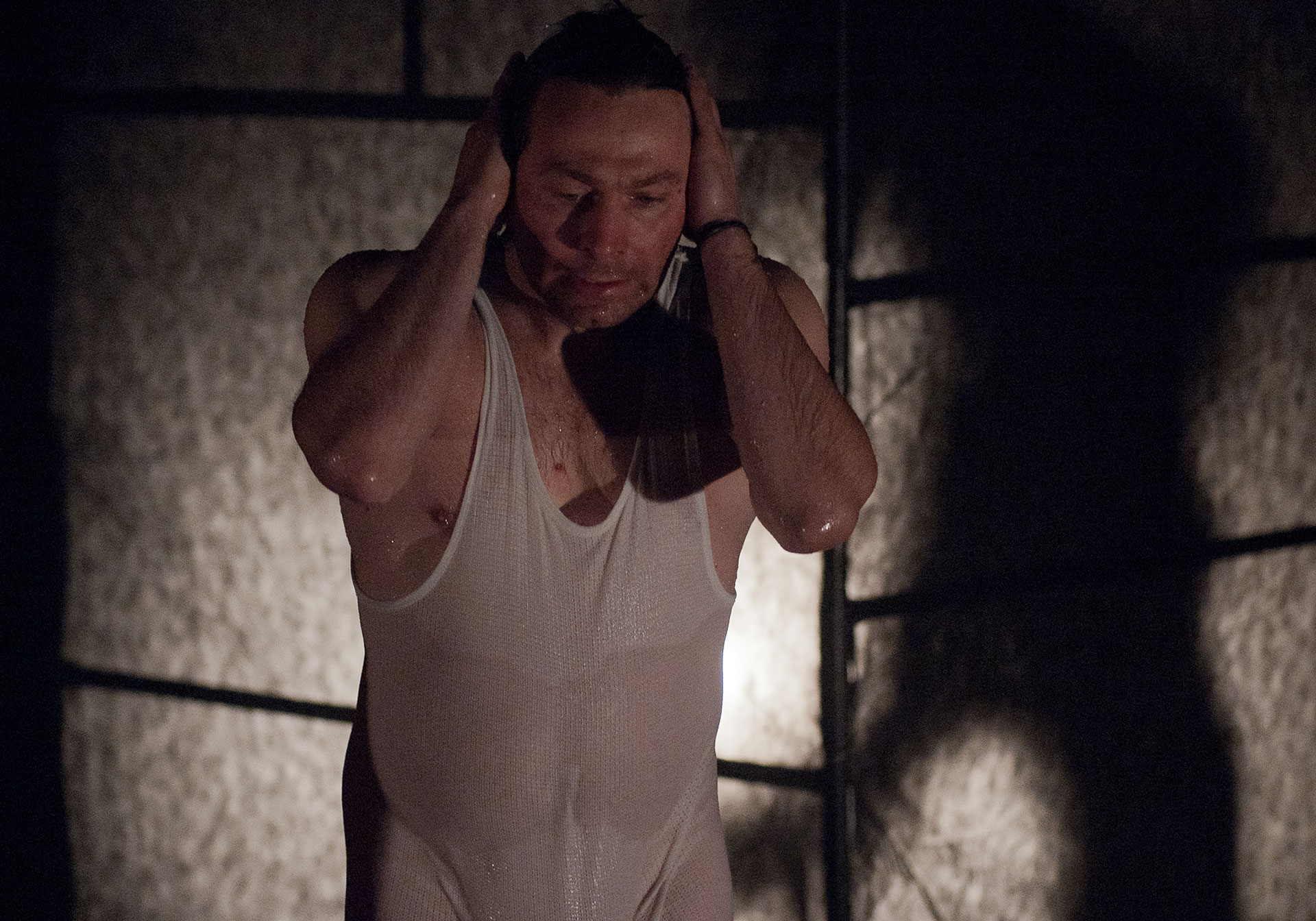
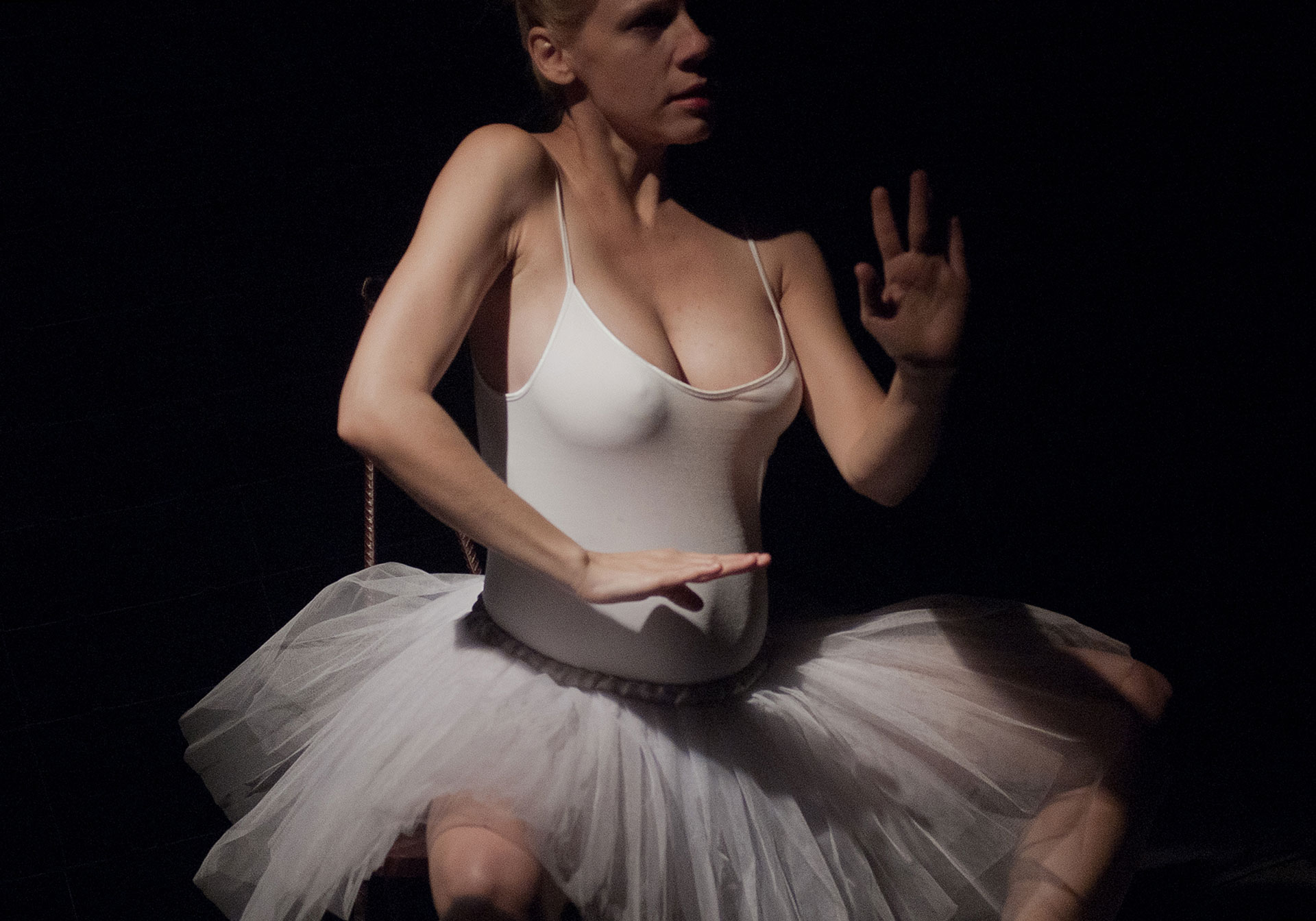
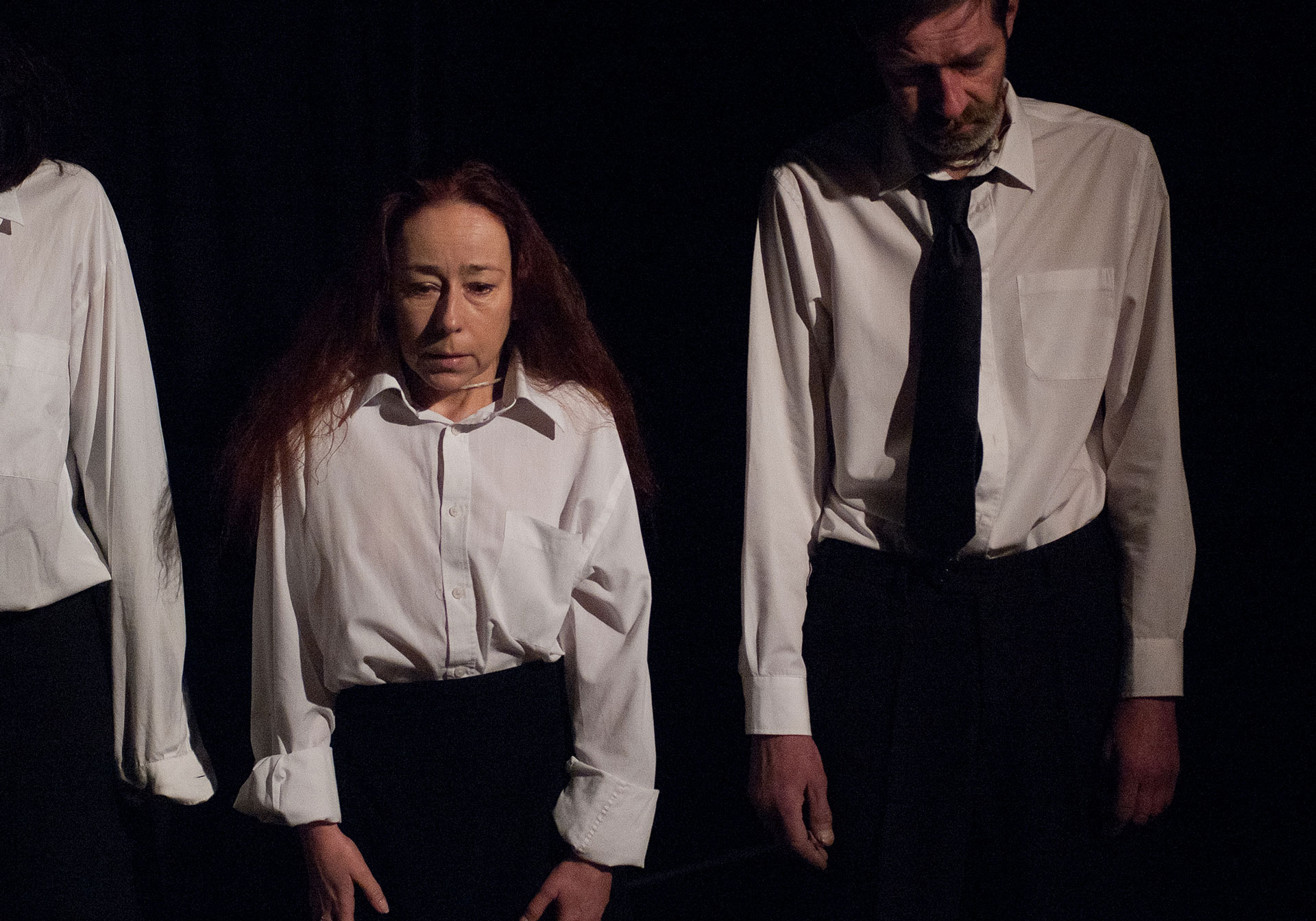
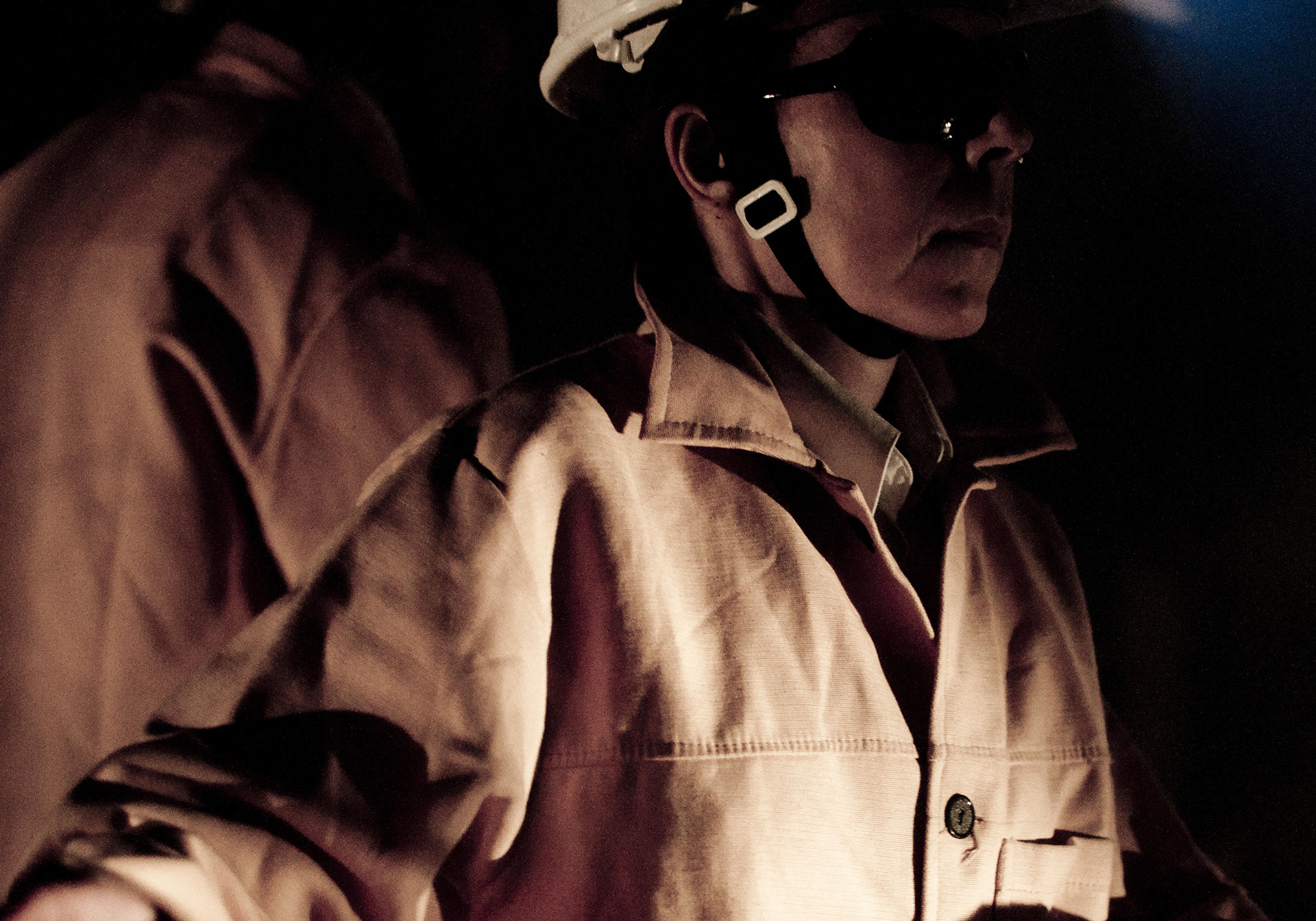
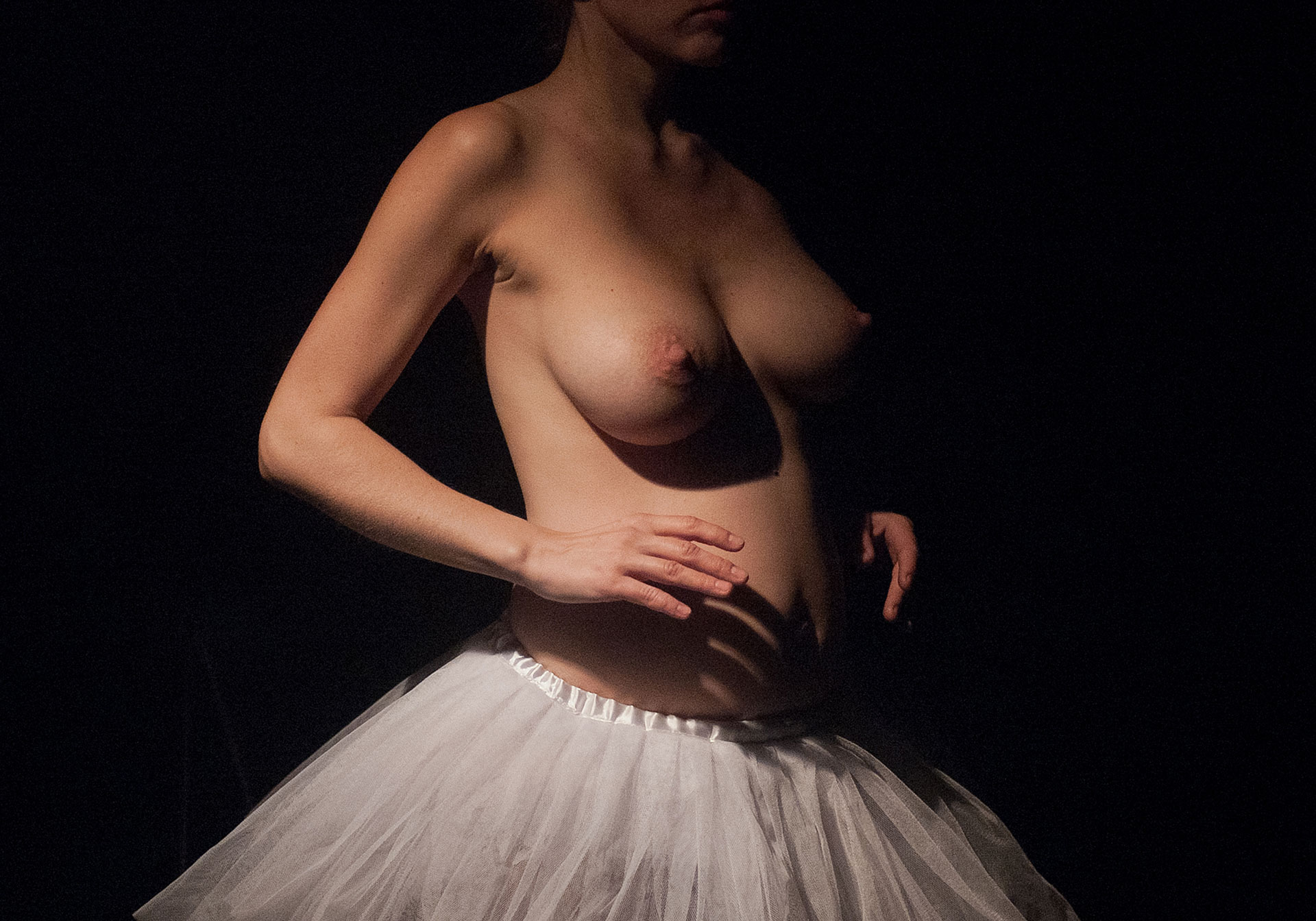
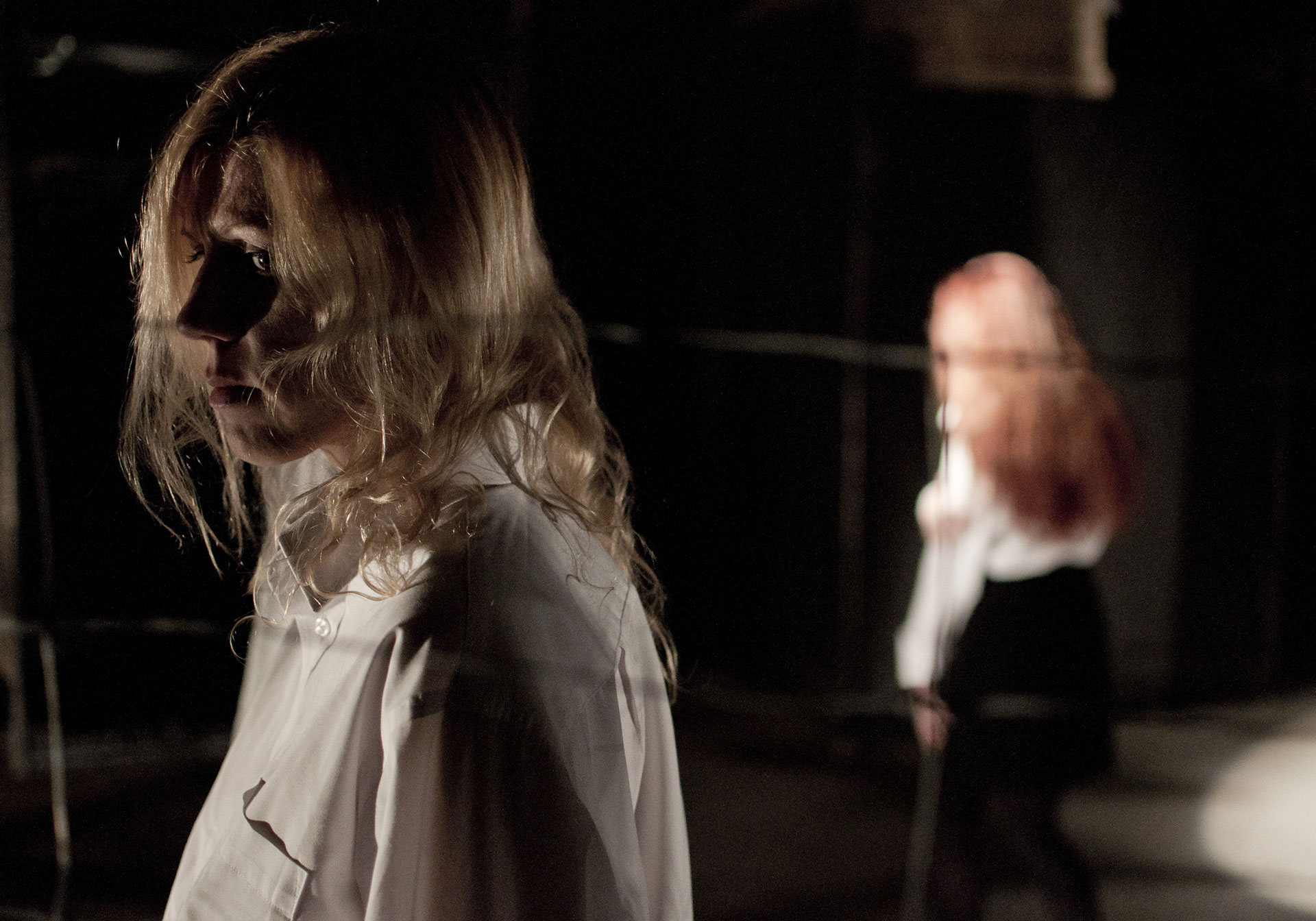
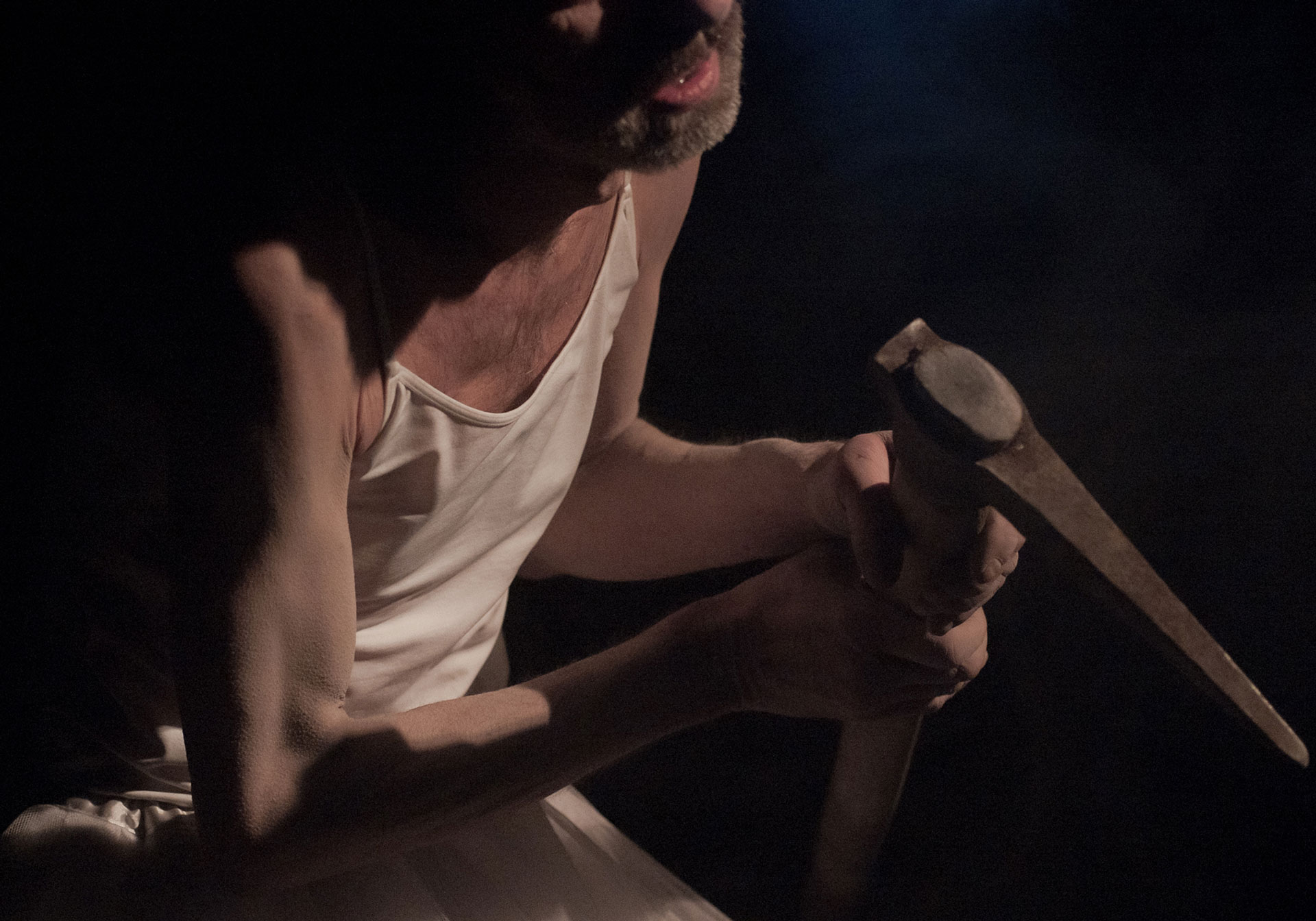
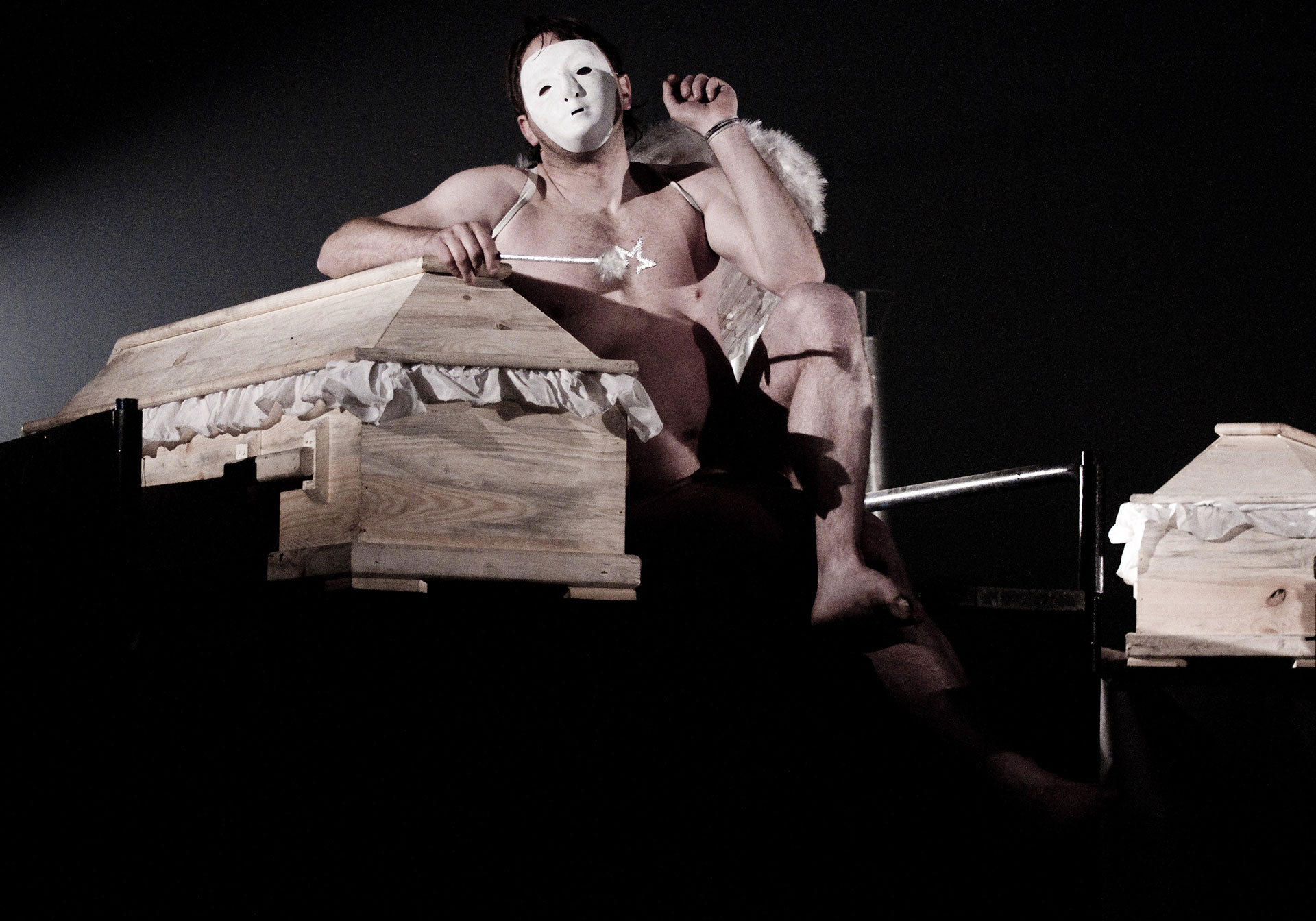
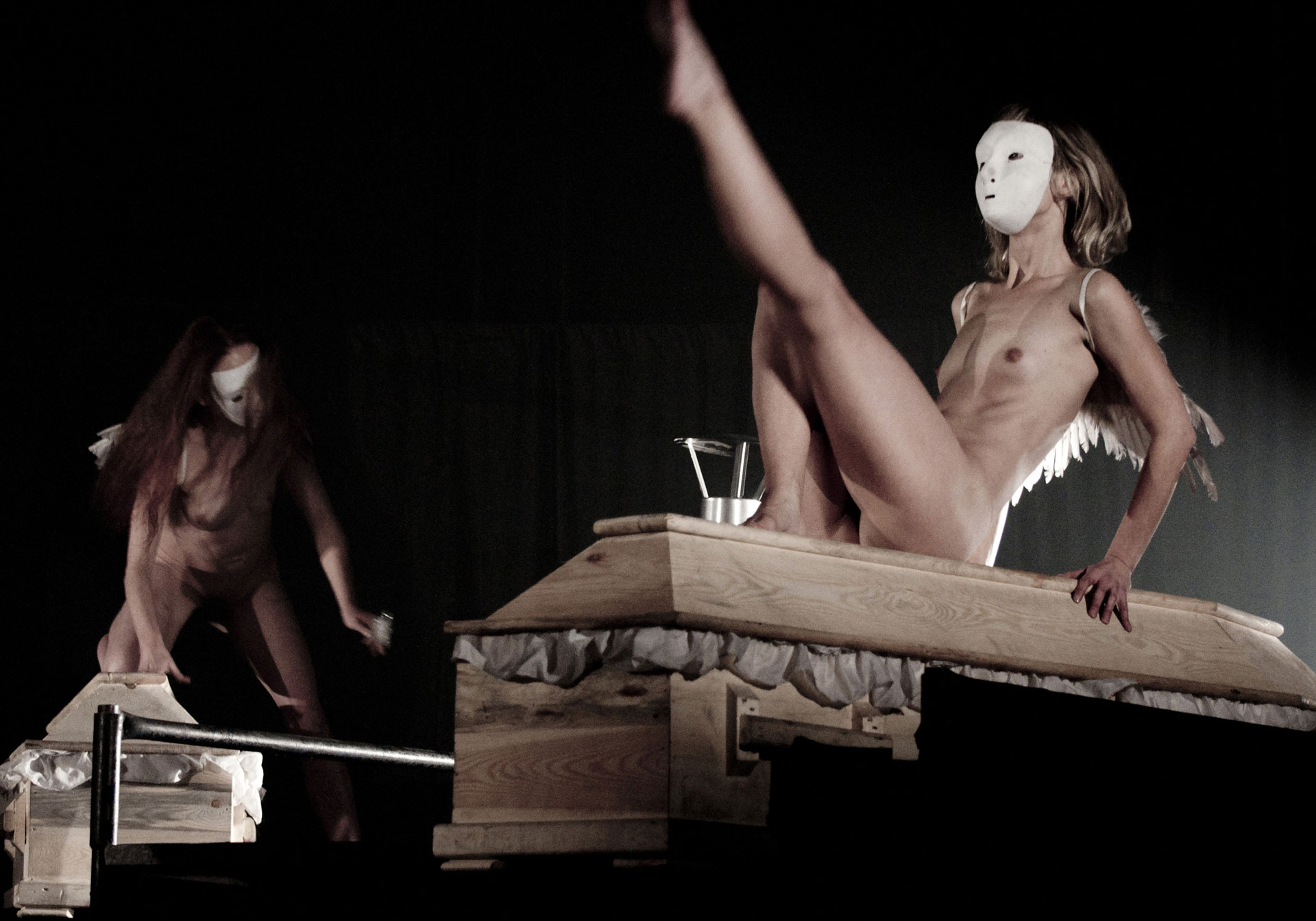
Teatr A Part’s site specific project entitled “Gomo Land” is a surrealistic phantasmagoria about freedom and death. The performance is a wordless tragic-farce, series of episodes torn apart between a dignity of drama and a carnival of grotesque. The title Gomo Land is an utopian anti-land, a labyrinth of dead, where, beyond the time, dead and half-dead: people, communities and nations wonder. It is a dungeon, an abyss of catacombs and a black hell of deep mines in one. The aesthetics of the performance was affected by a local colour and specific character of the landscape and culture of Upper Silesia, a region in South Poland, where authors of the performance live and work.
The show is inspired by, among others, the works of naive painters, especially artists gathered in the Janowska Group connected with two mining districts of Katowice: Nikiszowiec and Janów.
The performance took place several times at old historical inactive cinema Kino Słońce in Katowice-Janów, where it was created and one time in special outdoor version in Warsaw.
concept, script, direction and set design: Marcin Herich
script co-operation: team of the performance
acting: M. Katarzyna Gliwa, Natalia Kruszyna, Joanna Pyrcz, Monika Wachowicz, Maciej Dziaczko, Cezary Kruszyna, Marek Radwan, Lesław Witosz
set co-operation, production co-operation:
Natalia Kruszyna, Monika Wachowicz, Cezary Kruszyna
music: fragments of works by Johann Johannsson, Ortomo Yoshihide, Mr Geoffrey & JD Franzke, Ulver, Dream Theatre, Social Interiors, Toska and Tomaso Albinoni
first night performance: Katowice, Poland, 2012
duration of the performance: 60 minutes
PRESENTATIONS
*old inactive Movie Hall The Sun in Katowice-Janów (4 of Nov 2012)
*old inactive Movie Hall The Sun in Katowice (7 of June 2013)
*old inactive Movie Hall The Sun in Katowice (15 & 18 of June 2013, International Performing Arts Festival A Part)
*Agrykola in Warsaw (5 of July 2013, International Festival Art of the Street)
CRITICS
The latest show by the Teatr A Part is a game of tag.
The player to be tagged is element-al: earth, water, fire, air. Tagged, moved, caught, it sets a new base. The territory of extermination is outlined by The Salt of the Black Earth. The coal underground is no Promised Land, but rather a concentration manhunt. An Edenic utopia turns into an infernal mine with no gold in it. The game, more competitive or parlour in its nature, is being rewound. Watched in reverse order, literally behind the backs of the players, automatically pulled onto their shoulders, it forces them to play out the initial stages of tag. In the space of a disused cinema rises smoke from a gas chamber, we see a group of nude people, associations are invoked with “The Game of Tag” (a film by the Polish artist Artur Żmijewski). The snake of sin, a tempter and a constrictor, wants to put out the fire. With a last breath, life is extinguished. After the Holocaust, the world does not disappear. We play on. “Gomo Land” offers a Landscape After the Battle of Upper Silesia. The specificity of the region inspired the director – Marcin Herich – to create a surreal land of death without freedom. The fertile chernozem bred a source of life.
The performance closes with a balloon scene, a real high. Relaxation and liberation arrive. Circulation is restored. Performance is finished. The premiere somehow coincides in my mind with Michael’s Amour. Haneke’s cinematography has a lot to do with it. The drama of a sick world becomes a ruthless reality. The game of hide and seek with no explanation leads in the dark to the genesis of tragedy. It begins with the end, not to keep us waiting for the end. The end.
Agata Goraj, Portal Katowicki [Katowice, Poland]
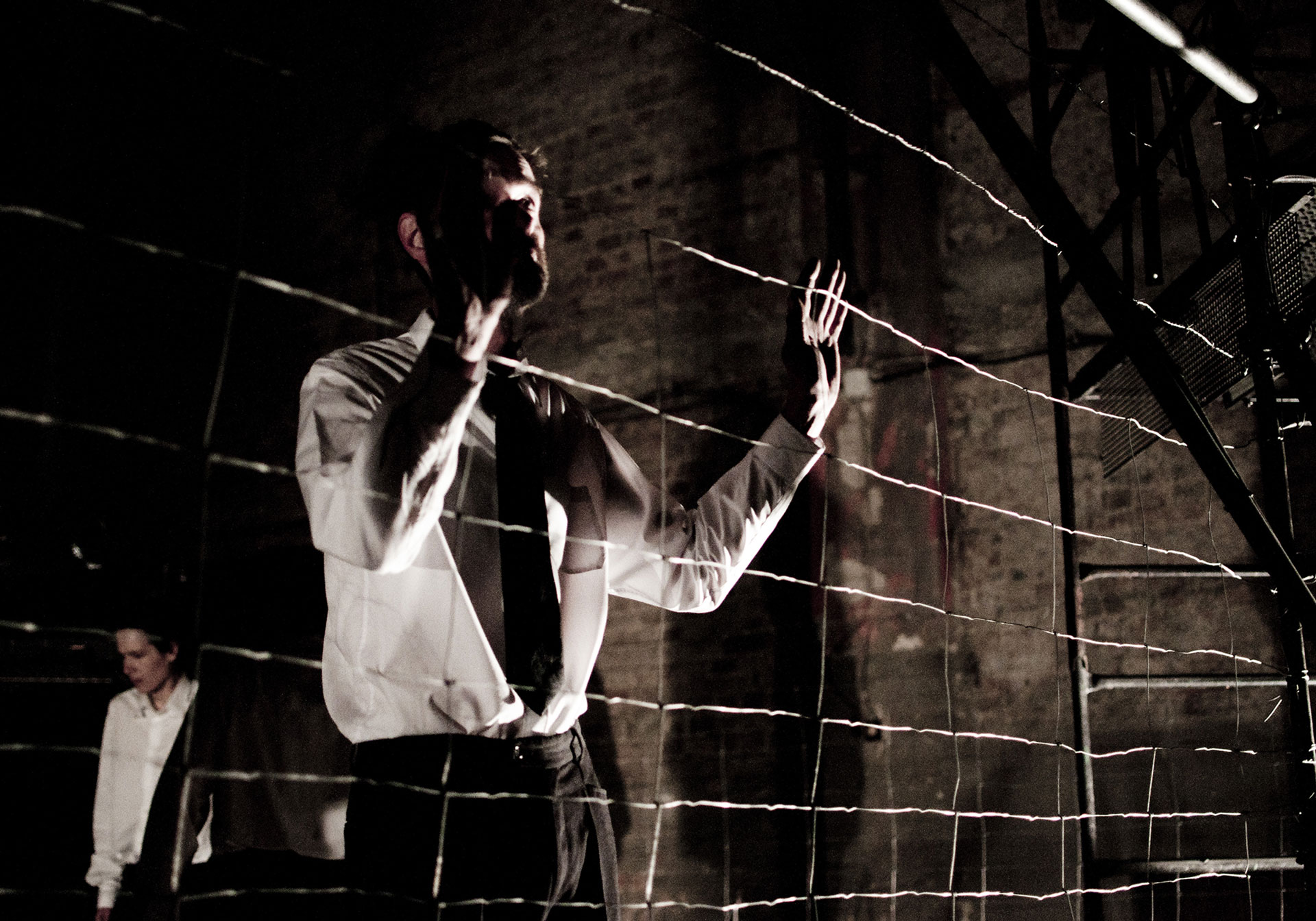
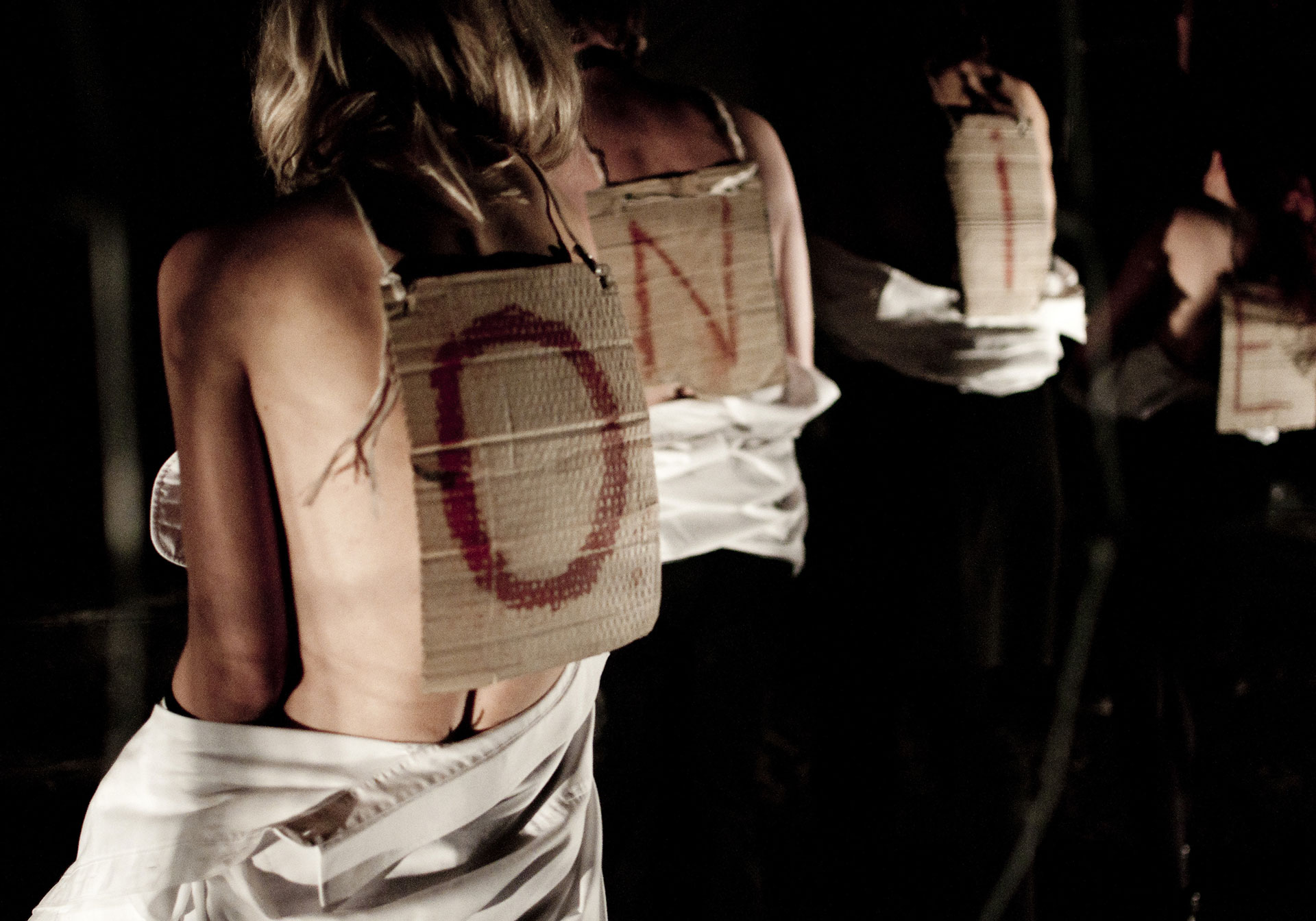
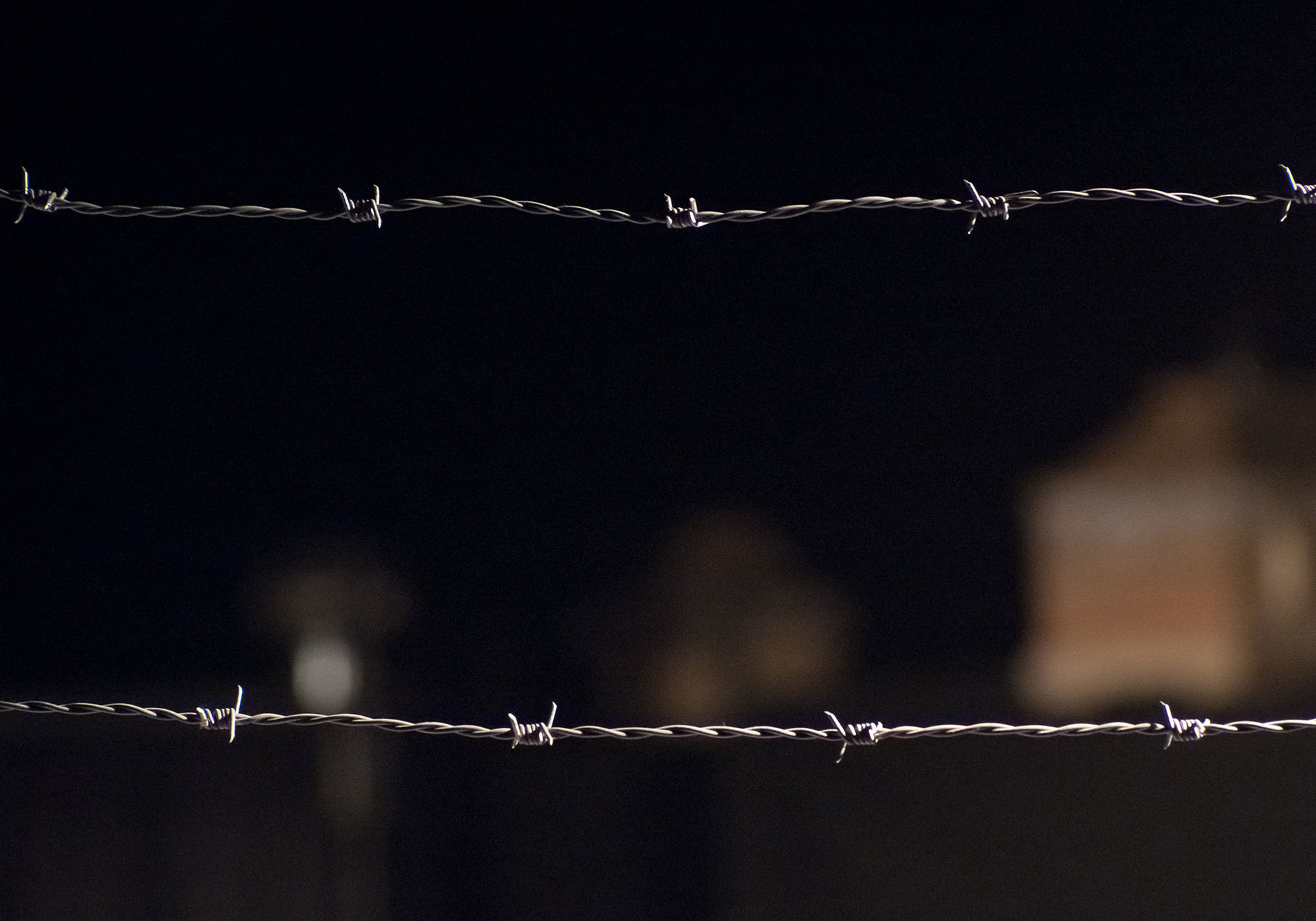
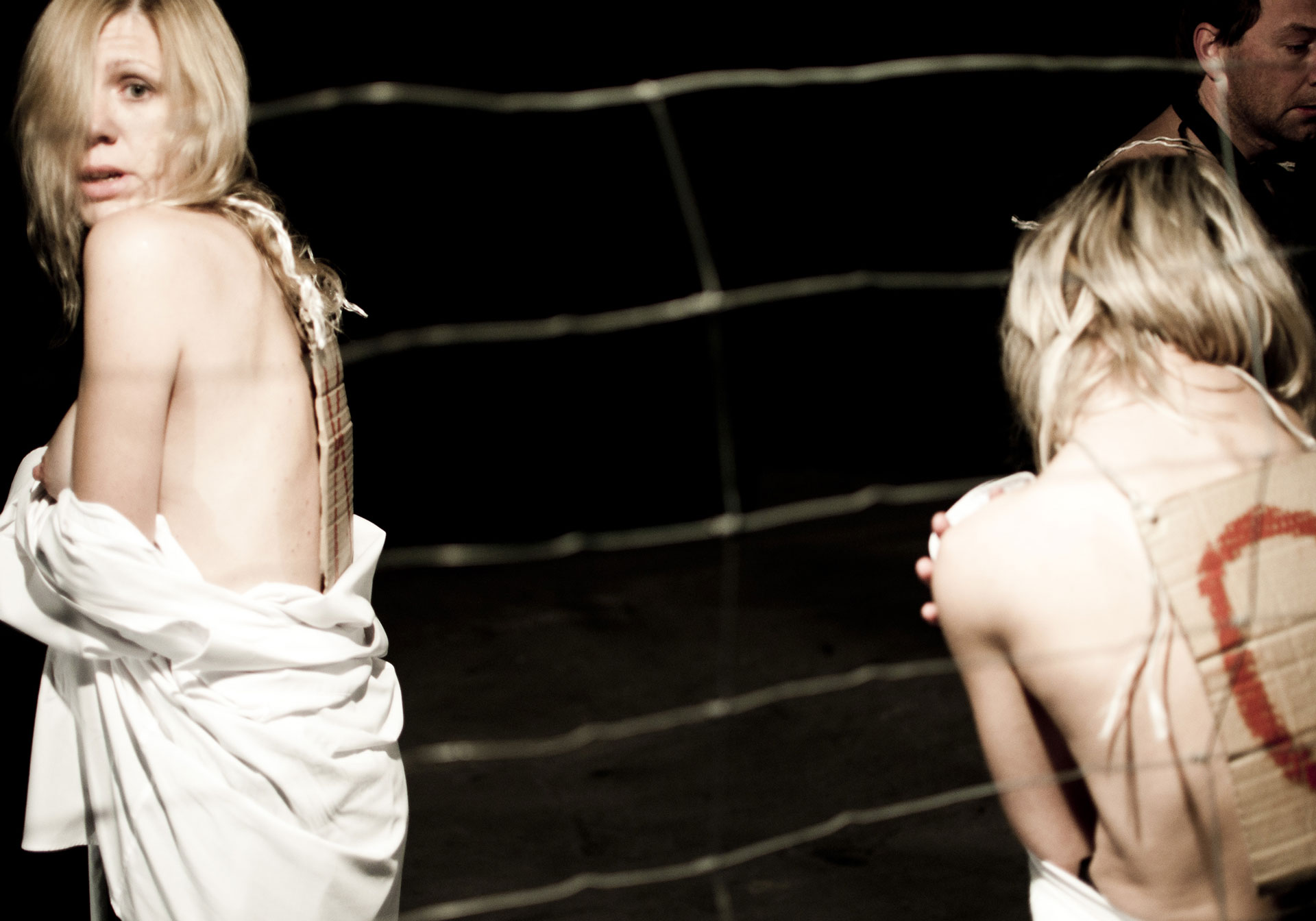
Right from the first moments of “Gomo Land”, an oppressive situation is clearly outlined, constituting the foundation of the performance. The scene is surrounded by metal railing, crowned with barbed wire, and the only gate leading inside is carefully watched. The cornered characters, after circling desperately this enclosed space reveal cards hanging under their clothes, letters printed on them forming the words “the end”. Indeed, this is the beginning of the end of their world.
The former cinema Kino Słońce, located outside the centre of Katowice – between the working-class housing estate in Nikiszowiec and Janów – is a brilliant place for the telling of the story in which pictures and sounds appear derived from the life of Silesia. This area, situated outside the mainstream of events of the metropolis, is also ins-cribed in an interesting way into reflection on domination or transience, motifs which may be found in “Gomo Land”.
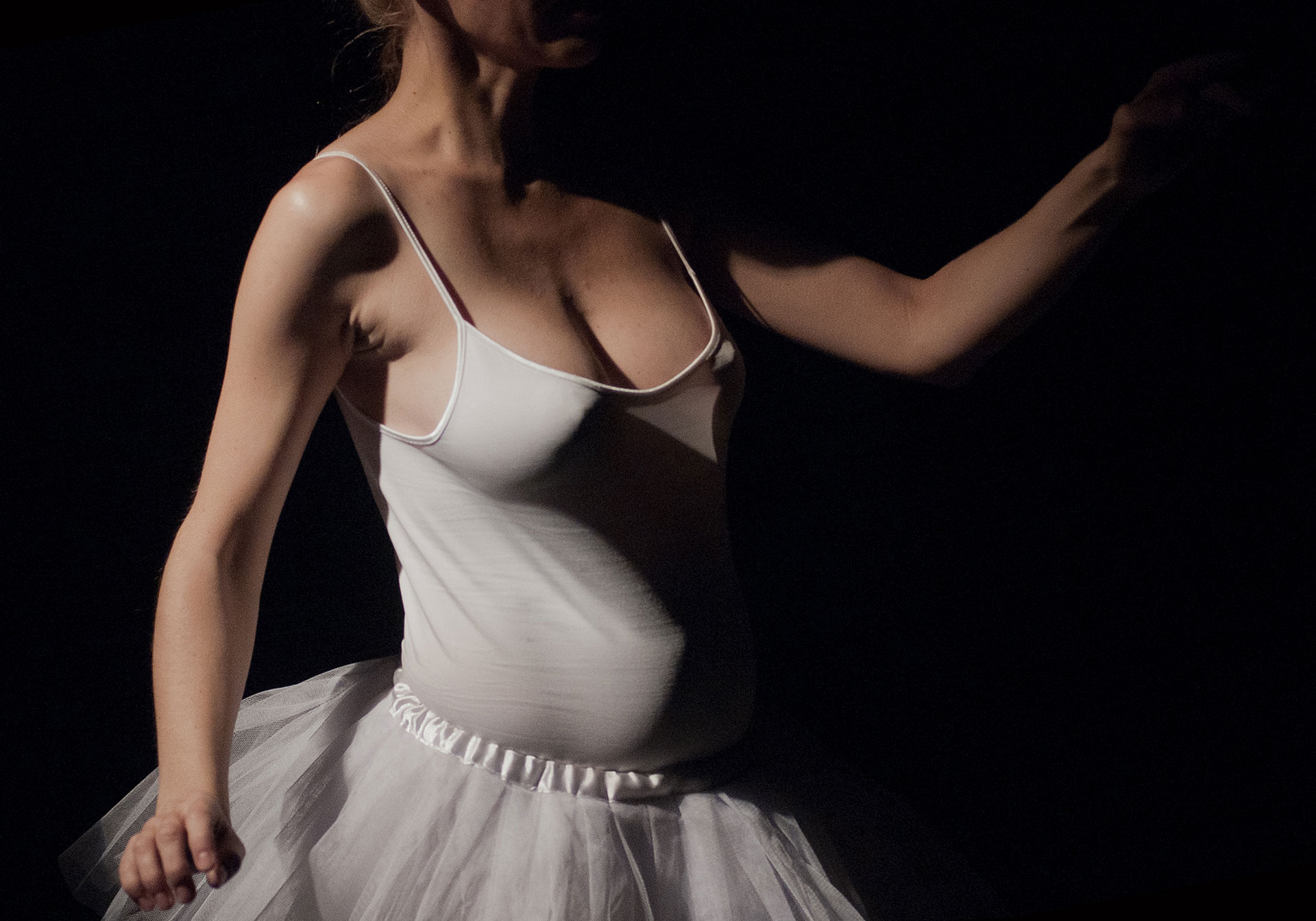
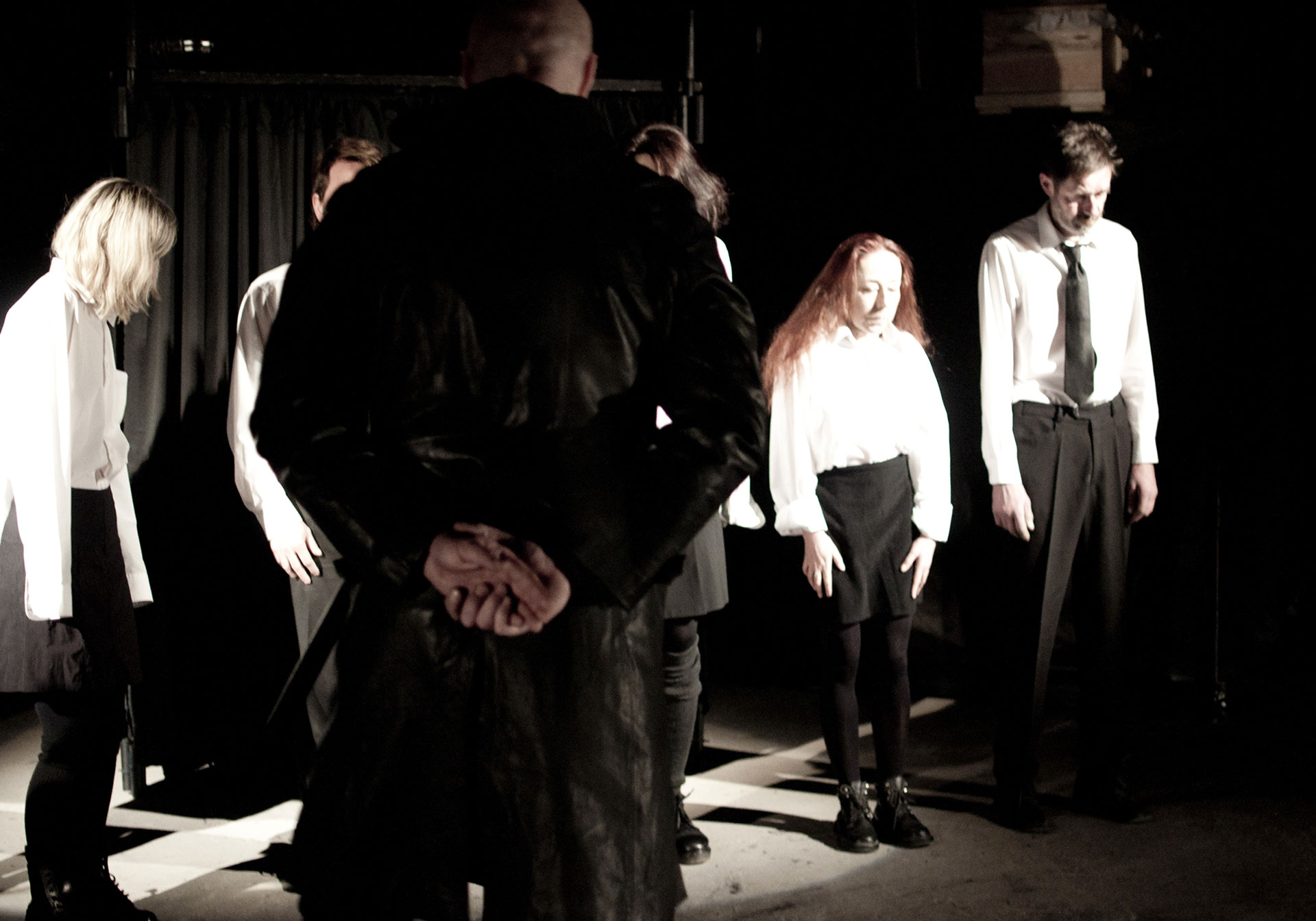
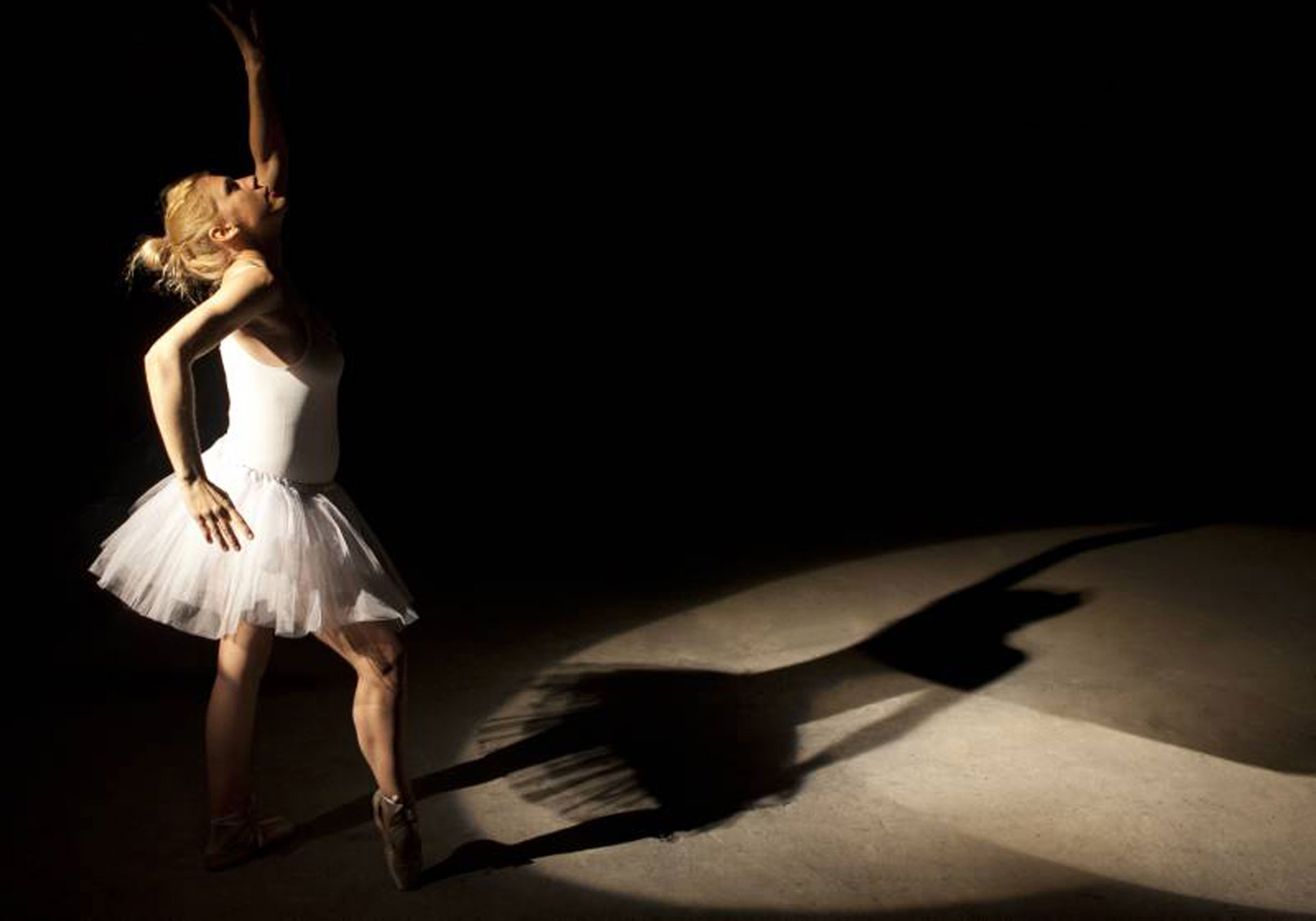
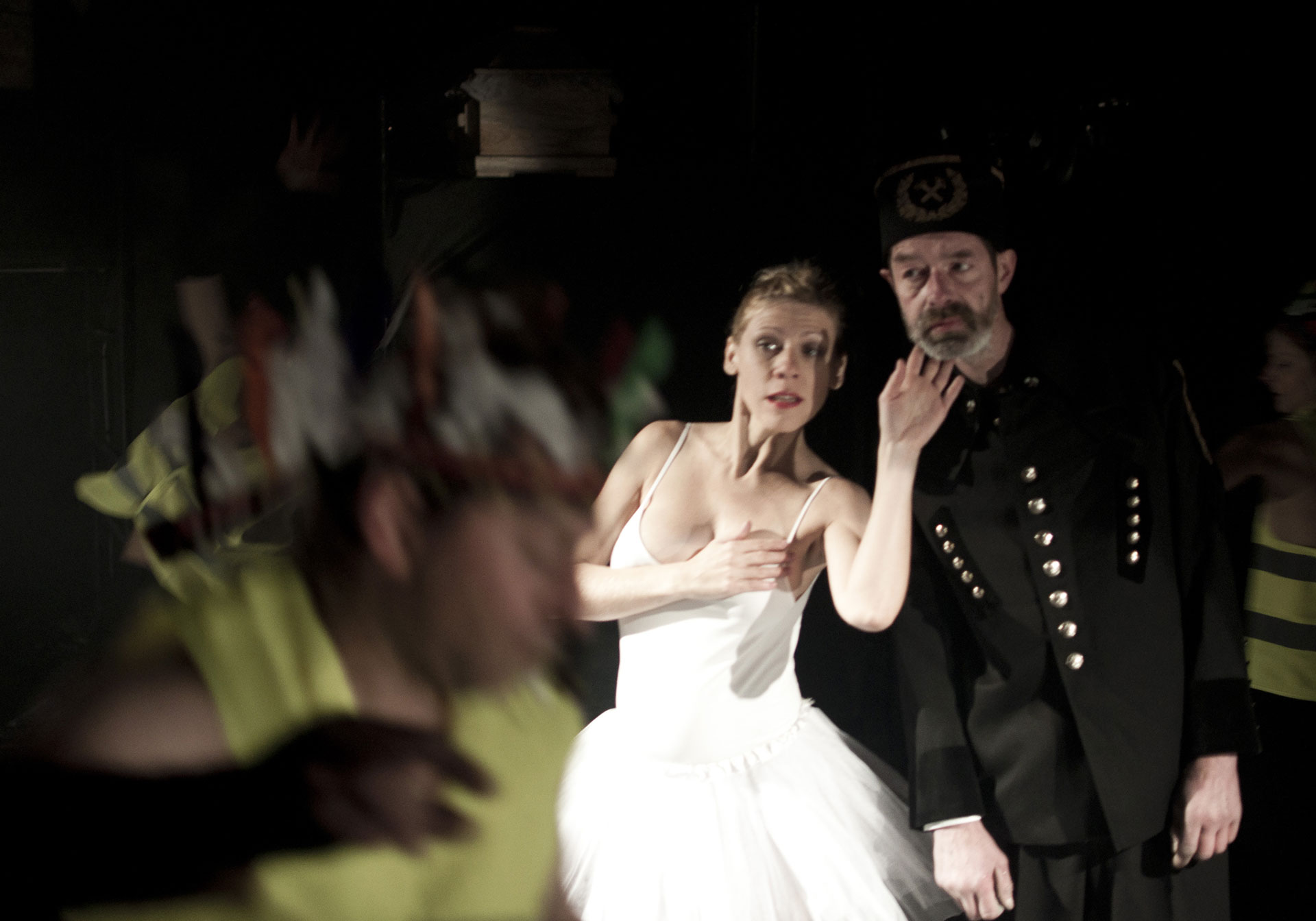
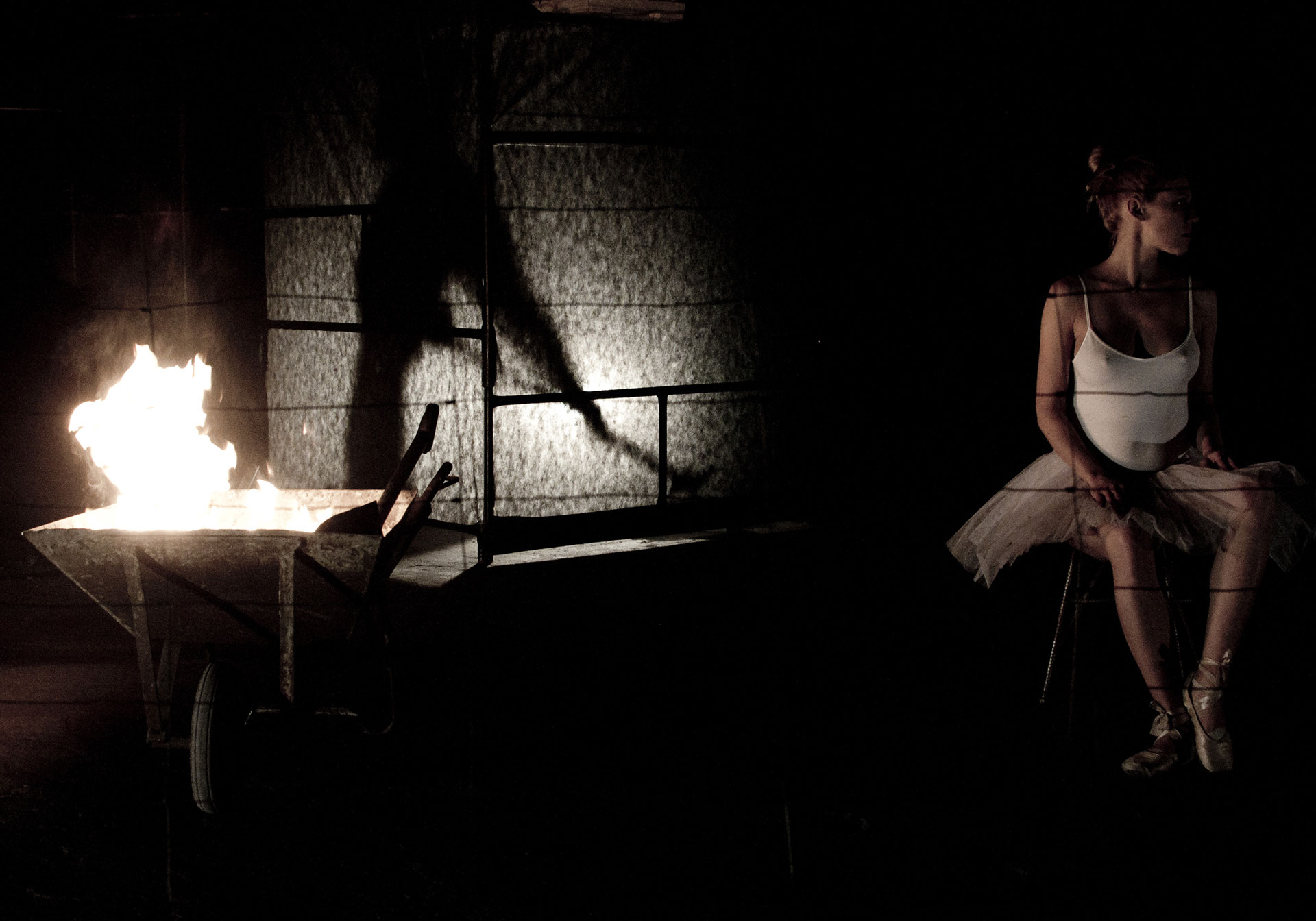
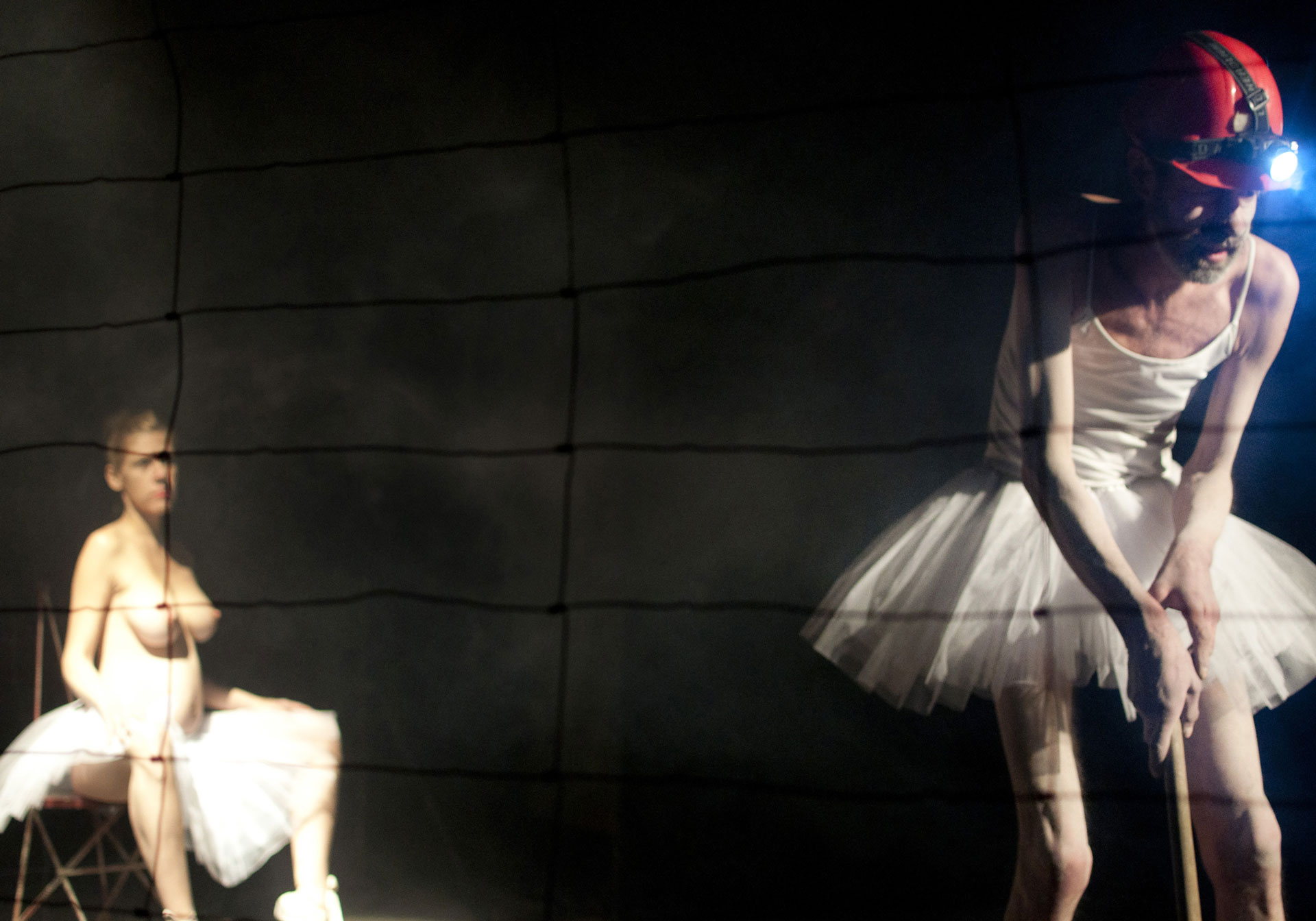
Suggestive, distinctive images are a trademark of the Teatr A Part and they are by all means part of their most recent show. The first, very important sign is the stage design itself: a metal structure delineating an enclosed, hostile space, overlooked by men dressed in black leather coats. The performance is built on clear antinomies: the guards move confidently, the people enclosed shift quickly from place to place, stopping constantly to examine their situation – which remains pitifully hopeless. Power lies, unfortunately, not in their numbers but in the omnipotence of authorities, whose many faces are revealed by the director. Further (apparent) opposites are then demonstrated: Marcin Herich juxtaposes a miner to a delicate ballet dancer, the element of fire to that of water, ultimately to link even Eros with Thanatos.
Earth as a source, a space of life and work, of possibilities and limitations, and ultimately – the space of our final rest – has become for the authors a pretext to set a multi-layered tale in motion. A tale written not with words but with images.
Agnieszka Misiewicz, Teatralia [Katowice, Poland]
All lands that have been created were failures. I don’t know how long this thought has accompanied humanity. I have been here for a short time and my capability of perception which might be termed historical is, perforce, limited. I don’t know the thought processes of primitive creatures – the Neanderthal, then the Cro-Magnon man. Rock paintings, e.g. in Val Camonica, suggest some “other land”, and burial rituals of the Upper Paleolithic prove some primordial intuition of a “transitional state”. I don’t think I will go too far if I say that these are precisely the sources of theatre.
In Vedic writings and later in Judaism, this reflection is no longer a mere reflex. It is the core of knowledge. The biblical Land of Nod is nothing else than the land of exile, the space of wandering. All lands that have been created in modern times reflect this universal, existential experience. Reymont’s Kanaan of Łódź, taken into brackets of bitter irony, Ulro of William Blake and Miłosz. And even the recent film masterpiece by Danis Tanović, “No Man’s Land”.
“What are people to do – says Miłosz – if heaven and earth are not enough for them, and they can’t live unless they expect a different heaven and a different earth? If their own lives, such as they are, remain a dream, a veil, seen through a glass, darkly and if they can’t accept that they will never comprehend what they really were”. We are also dealing, in a sense, with “failed forms”, not artistically, of course, or speculatively, but precisely in the sense that they are part of the “dark glass”, through which nothing can be seen. And in which nothing is reflected.
It seems, anyway, that theatre – and I have, in particular, the avant-garde tradition in my mind, meaning Grotowski, Kantor, Leszek Mądzik’s Artistic Scene – by definition and exclusively works through this experience.
It is no different with Marcin Herich’s “Gomo Land”. Things truly get surreal. Gomo Land. The zone between birth and repression, sombreness and grotesque, life and convention, fragment and whole, the literal and the arbitrary.
There’s little room, the scene takes up almost all the space available, grows into the auditorium. It’s dark, claustrophobic, uncomfortable. But at the same time safe in spite of all. This is no more than theatre, I console myself, no more than convention. Behind the fence made of wire (the sound in the speakers, the actors’ gestures suggest that the wire is live) a Foucauldian land of discipline and punishment extends. Everything is symmetrical – lights and fire, undertakers and watchtowers, chairs and cigarettes being lit, because symmetry is an expression of order or, to be more precise – subordination. The fence is electrified, life and work take place under surveillance, in the shadow of rising totalitarian regimes, in the cacophony of the influx of information, of jackhammers and pickaxes, of metallic grinding and gongs in the shaft. The only thing that’s asymmetrical is the individual fate, individual history, trying to take place and to explode the frames of the tale. To exit the matrix. And everything ends in grotesque, of course, in la danse frivole or danse macabre, or a Dionysiac pseudofolk show taking place over coffins. Twilight of the gods? No, it’s rather laughter of the gods that looms over human fate. Olympus has a life of its own, while down there, people get lost even with their light.
I think about all of this after I’ve left the theatre. Also about how the transition point is barely perceptible, almost invisible.
Radosław Kobierski, www.2016katowice.eu [Katowice, Poland]
Photos: Jacek Lidwin, Paweł Siodlok
open gallery view video