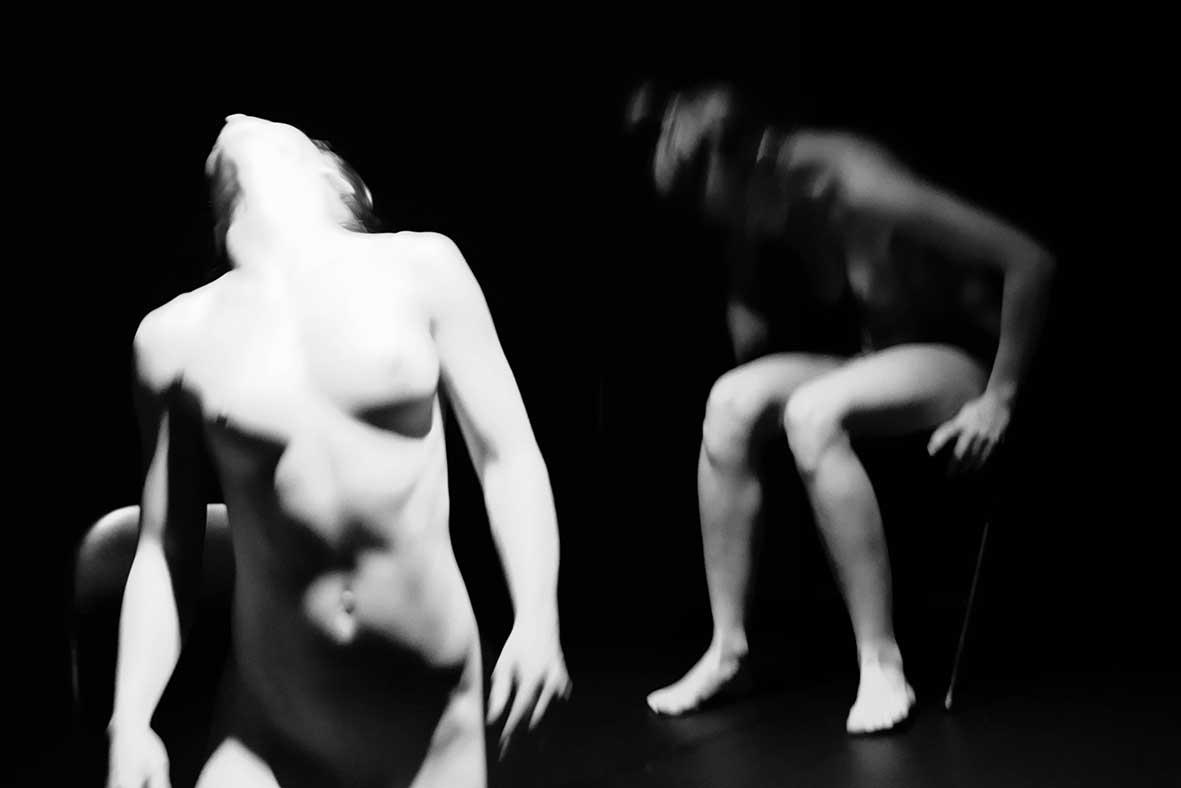
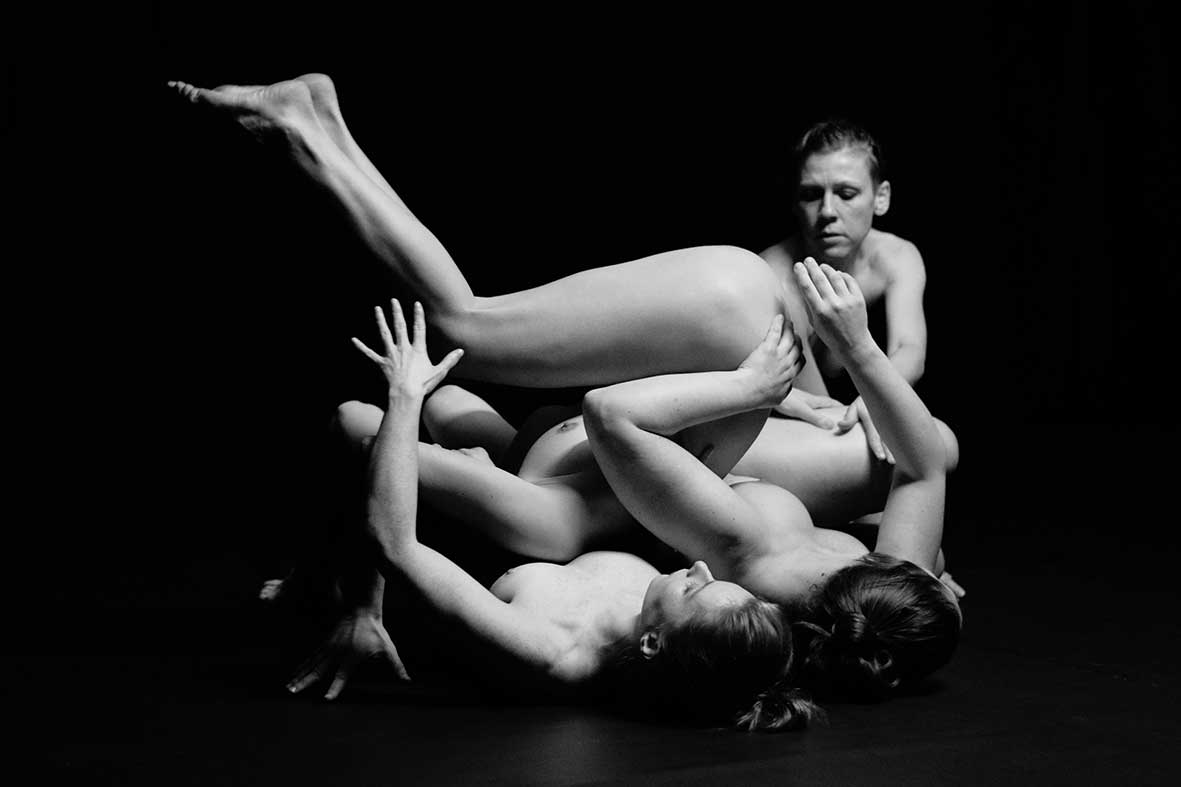
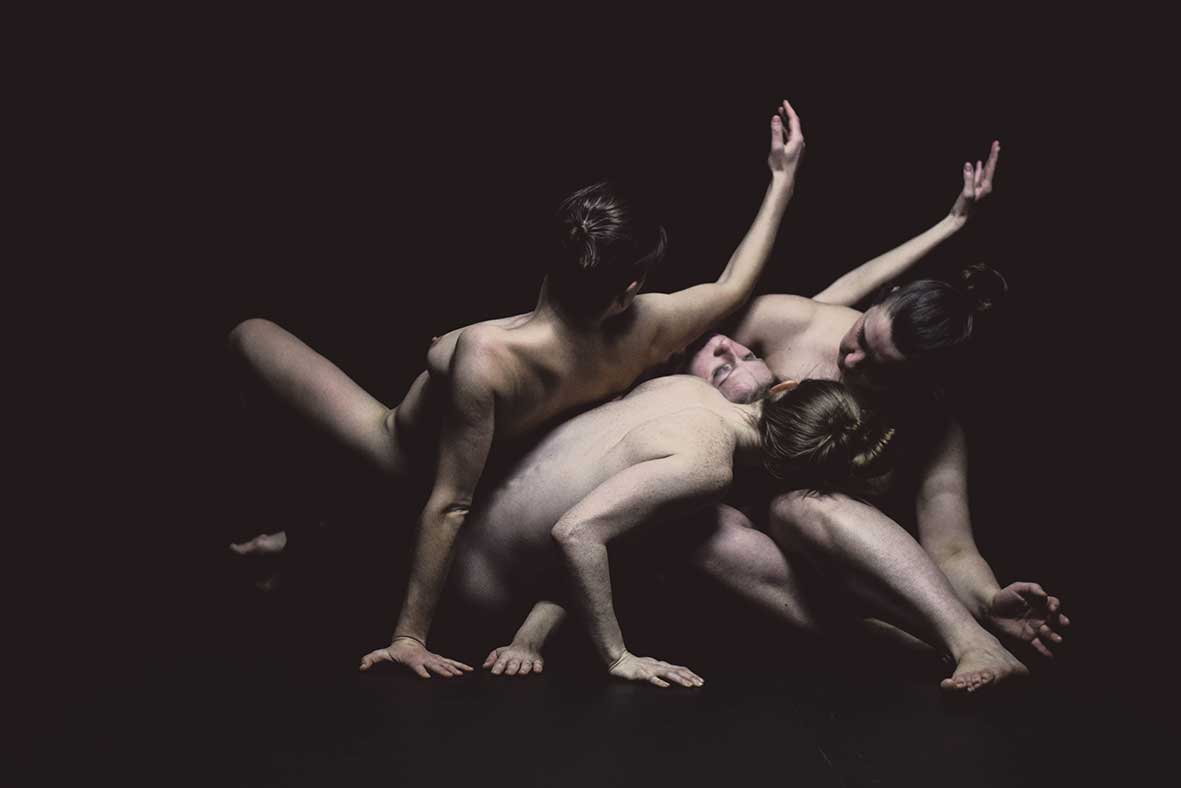
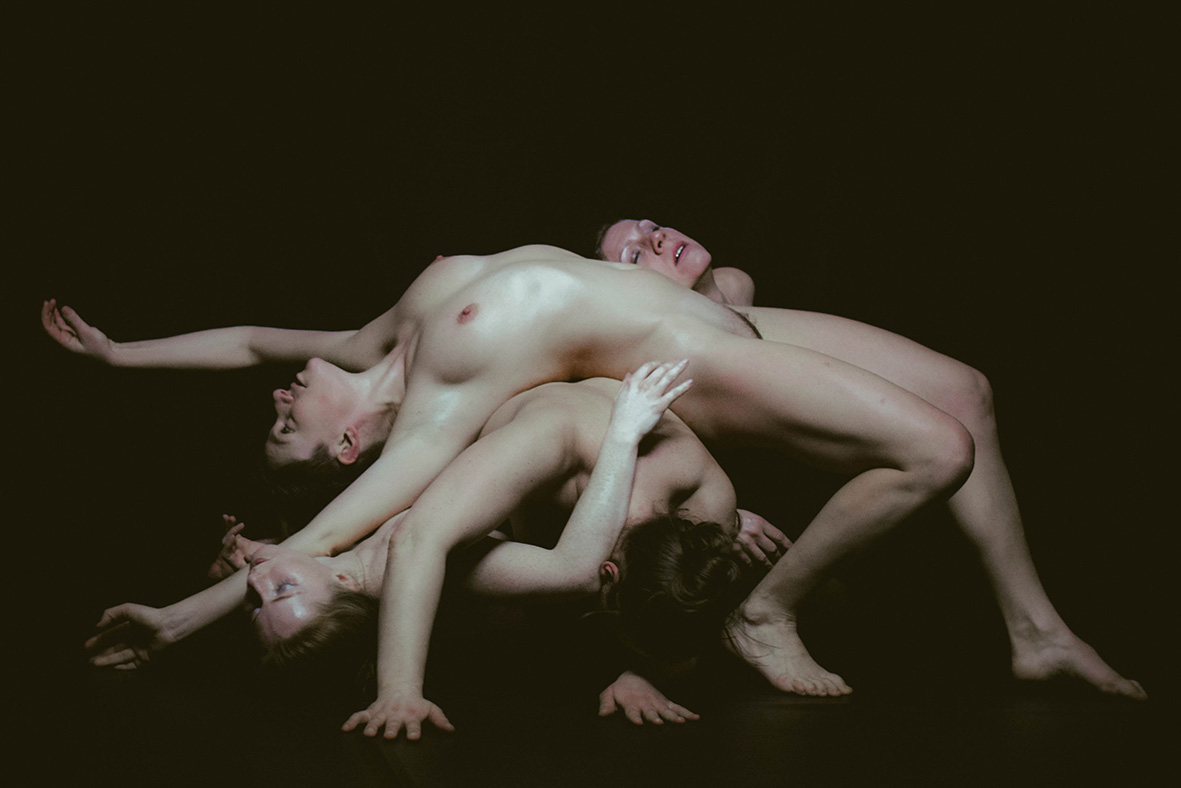
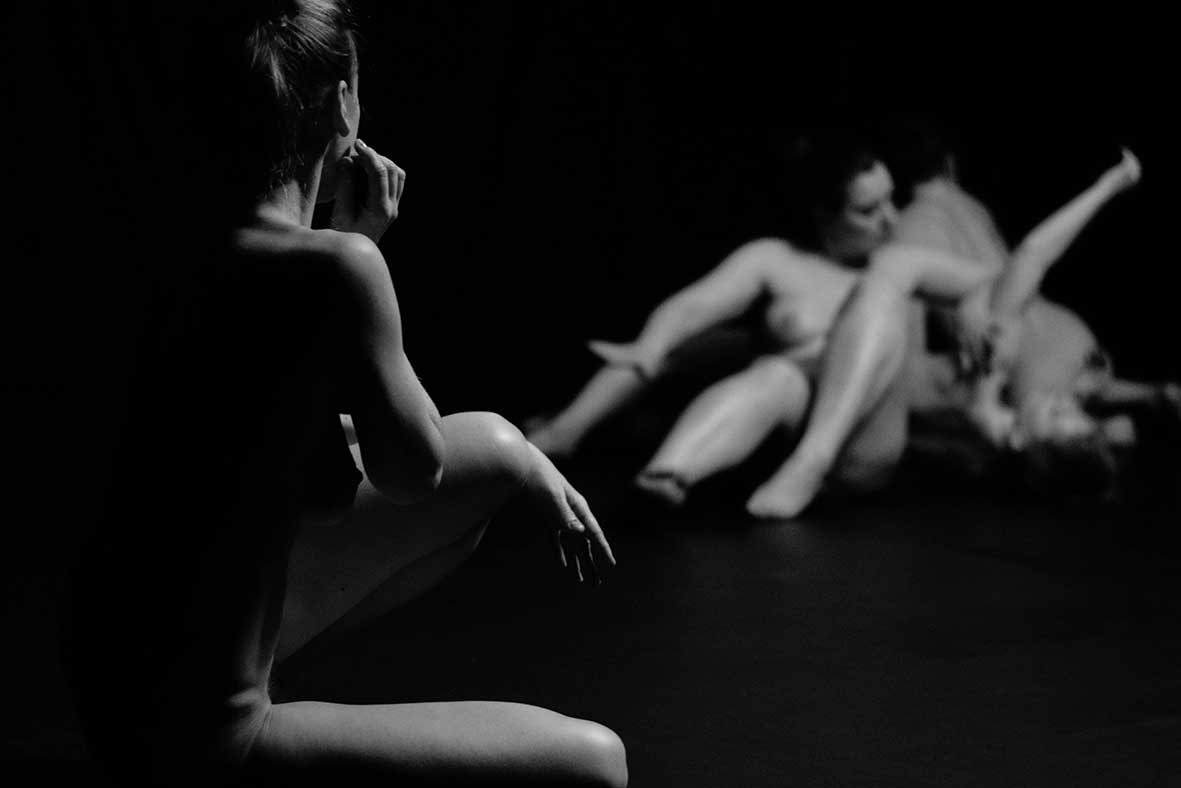
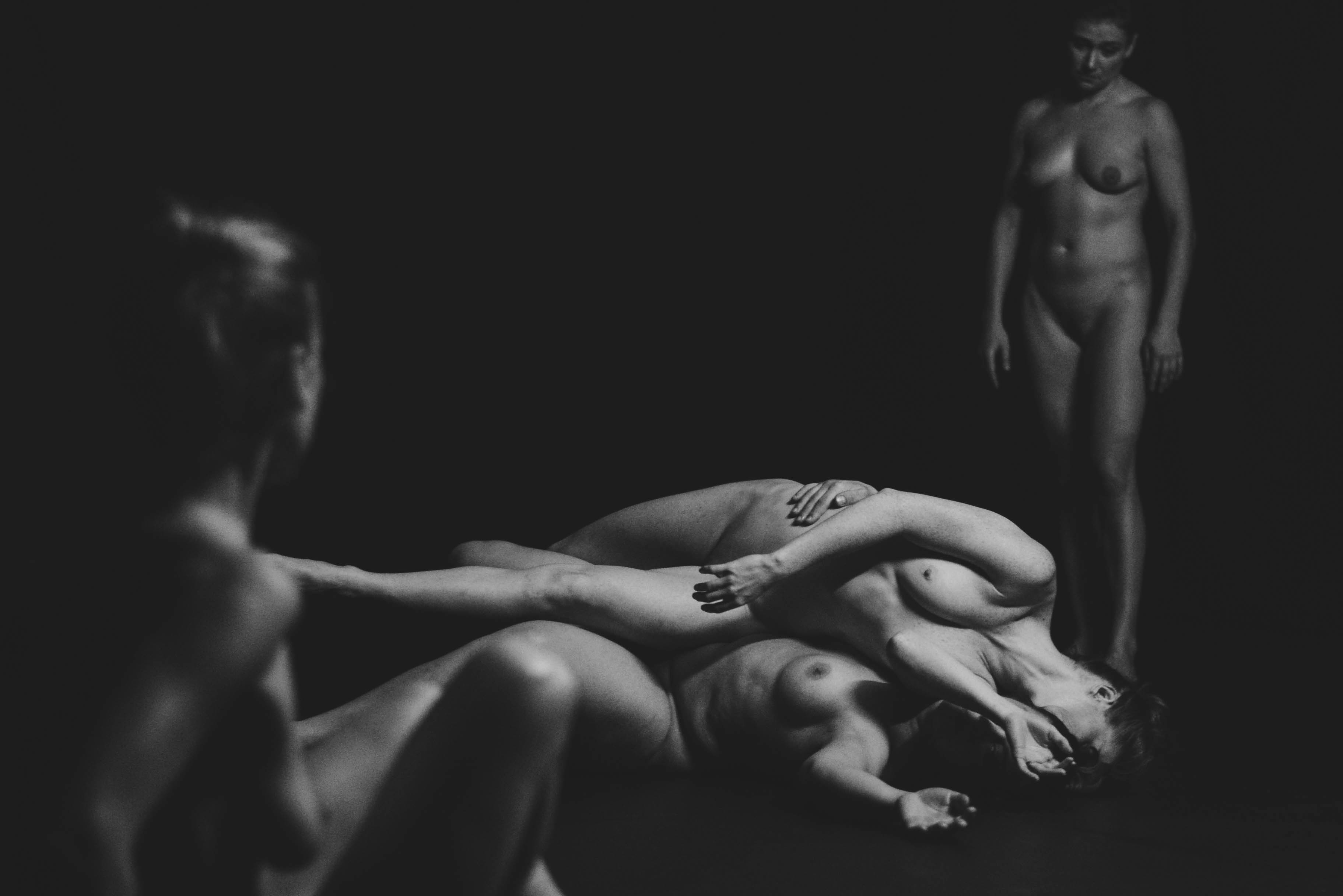
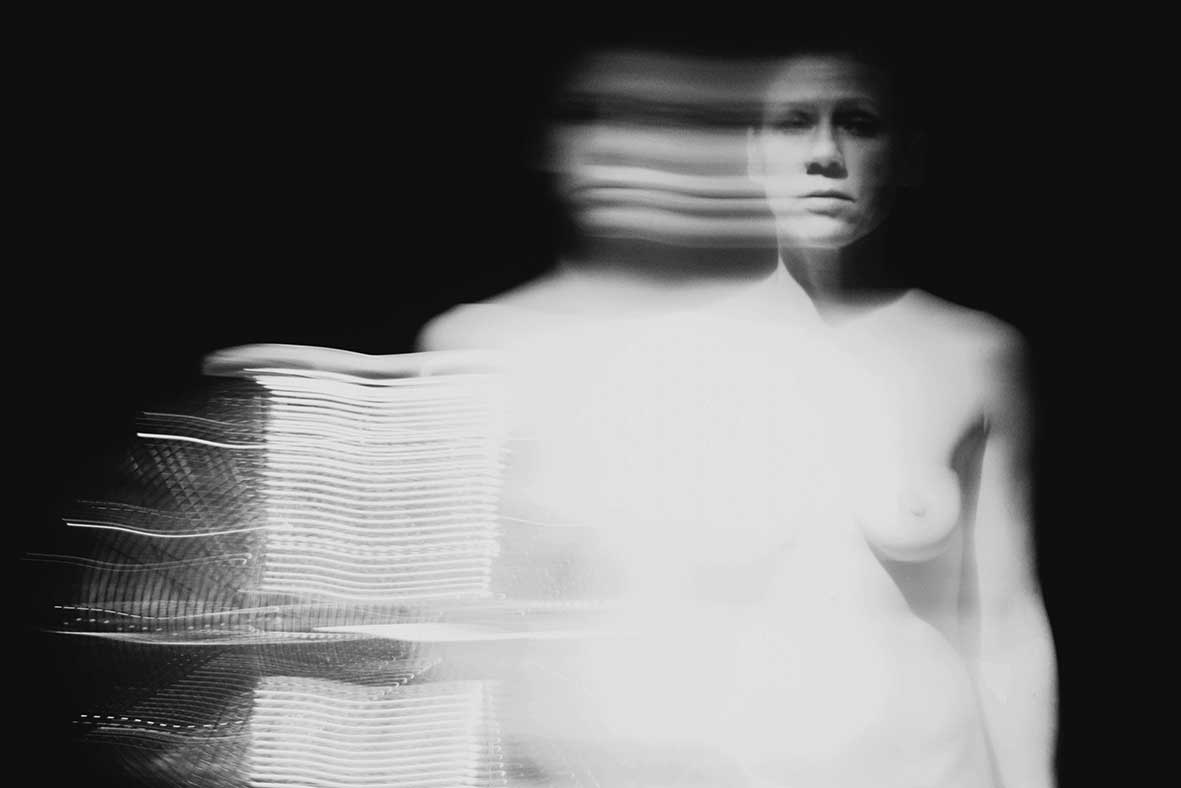
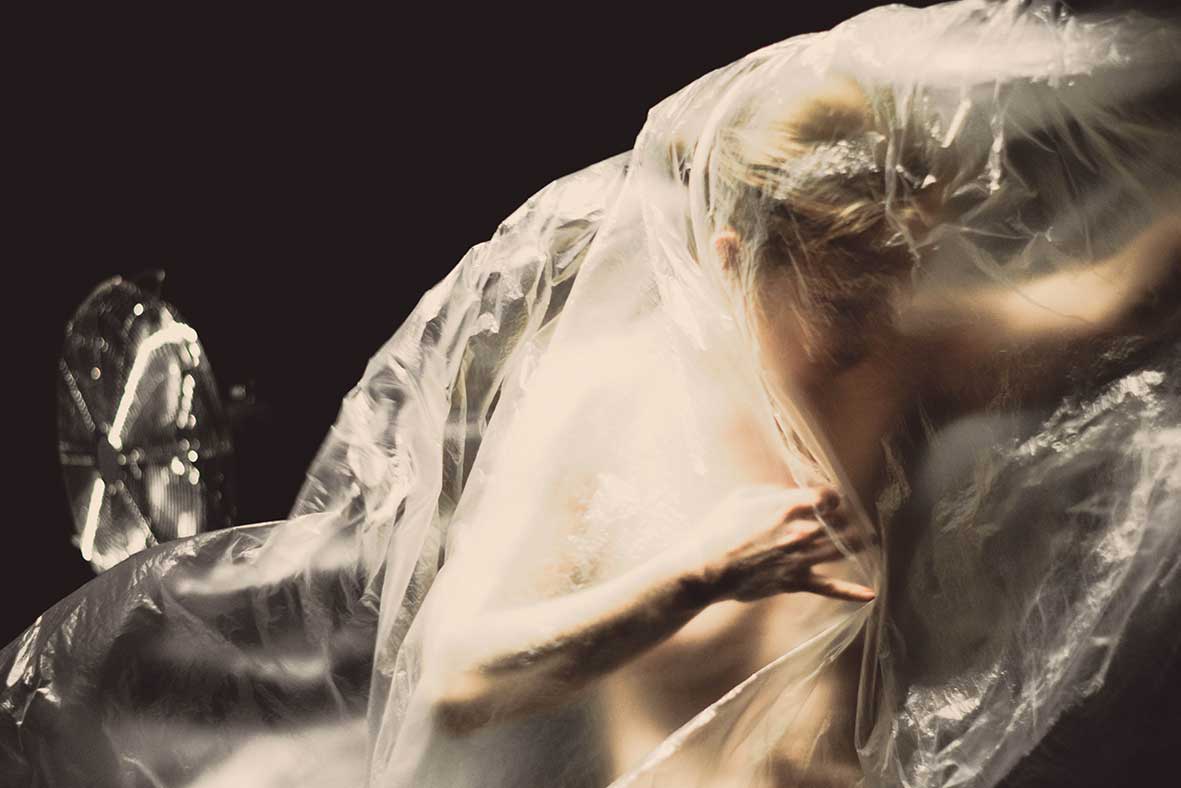
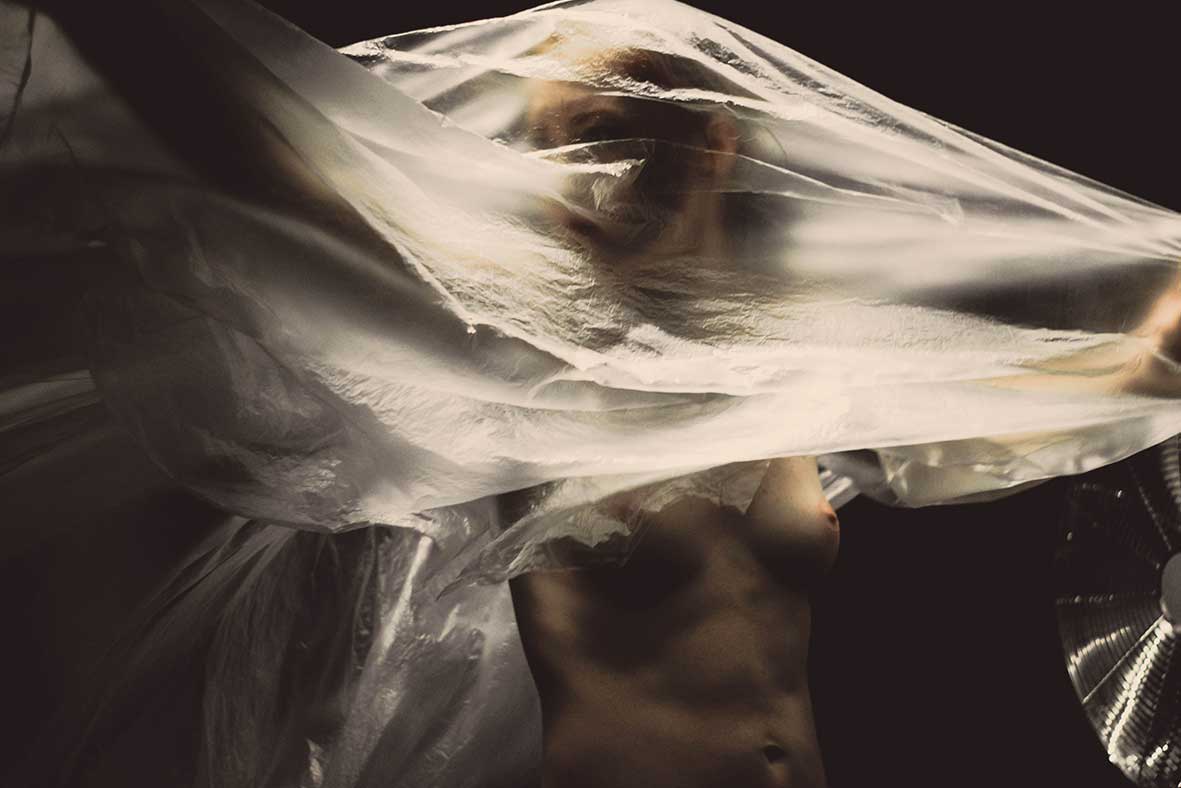
FOUR is a sequence of stage compositions for four naked female performers, movement, space, sound and light. The performance was co-produced by two Polish independent theater companies: A Part from Katowice and Amareya from Gdańsk, under the direction of A Part leader Marcin Herich. “Four” is the first performance of Marcin Herich’s quadriptych under the common title “4”. So far, three parts of the series have been created: “Four” (2018), “Four More” (2021) and “Three Four” (2023).
Four performers. women, people, bodies.
Four in Japan and Korea is the homophone of the word “death.”
In European culture it is the number of man, symbolizing matter and temporal order.
Four sides of the world, four seasons and four elements.
Four riders of the Apocalypse.
Four things insatiable: the abyss, the womb of a woman, earth and fire.
created and direction by Marcin Herich
choreographic cooperation: a team
performers: Alina Bachara, Katarzyna Pastuszak/Marta Zielonka, Aleksandra Śliwińska, Monika Wachowicz
music: Angel, Kato Hideki, Mr Geoffrey & JD Franzke
duration of the performance: 40 minutes
Co-production of Teatr A Part and the Amareya Theatre.
The performance, conceived and directed by Marcin Herich, was prepared by a team consisting of: Daniela Komędera-Miśkiewicz, Katarzyna Pastuszak, Aleksandra Śliwińska, Monika Wachowicz. Bartosz Gburek collaborated on the lighting design for the performance.
PRESENTATIONS
– 18.02.2018, Katowice (Stage/Atelier of Teatr A Part, first night performance),
– 15.06.2018, Katowice (Stage/Atelier of Teatr A Part, International Performing Arts Festival A Part),
– 8.03.2019, Katowice (Stage/Atelier of Teatr A Part),
– 7 & 8.09.2019, Gdańsk (Klub Żak, Polish Dance Platform),
– 4.10.2020, Katowice (Stage/Atelier of Teatr A Part),
– 6.10.2020, Toruń (ACKiS Od Nowa, Alternative Theatre Meetings Klamra),
– 9.10.2020, Bielefeld, Germany (Theaterhaus TOR 6)
– 4.10.2021, Lviv, Ukraine (First Theatre, International Theatre Festival “Golden Lion”)
– 7.01.2022, Wrocław (Performing Arts Centre Piekarnia – Grotowski Institute, Interstices. Women in the Performing Arts)
– 9.06.2023, Budapest, Hungary (Artus Contemporary Art Studio, Performing Poland, Theatre Olympics)
– 10.09.2023, Podgorica, Montenegro (KIC Budo Tomovic, Festival Internacionalnog Alternativnog Teatra FIAT);
REVIEWS
Two looks at „Four” by Teatr A Part and Amareya Theatre
This time, the meeting of artists consciously operating the body, light and gesture created a picture referring to the symbolism of numbers (the title “Four” is the most material, human and earthly of them), and thus transporting the viewer into the dimension of abstraction. So these two spheres – abstract and material – met in the naked bodies of four actresses and created the spectacle of Teatr A Part and Amareya Theatre.
Here, the bodies act as a prop, set and actor at the same time. The stage is shrouded in darkness, so the viewer, gently guided by light and music, concentrates all their attention on them. He observes the rich spectrum of their movements – from slow and lazy to violent and mechanical. It tracks the relationships they build with each other.
At the center of the performance is the materiality of a man along with his eroticism and limitations, but also desires, fears and feelings expressed through it. The creators of the spectacle present bodily images and allow them to follow the path that is marked by associations evoked by the viewer. This path is narrow and winding, after all four do not always mark only the sides of the world. It turns out that at its end there may be abyss, and even – in accordance with Japanese superstition –
death.
Łucja Siedlik
Four women. Four naked bodies bathed in twilight. Four chairs, four pairs of shoes and four windmills. It takes so little to present a study of femininity to the audience.
The artists, through their nudity – undoubtedly symbolizing both shame and courage – invited the viewers on an intimate journey into the consciousness of a woman. Seemingly accidental movements of actresses were an irregular repetition of a certain order of gestures, which are loosely connected with the sequences of other performers. The cyclicity of the movement, despite the violence of the presented figures, did not arouse anxiety.
The movement used later in the performance becomes smoother and more smooth, and the further course of the gestures slowly becomes clear. Connected bodies of artists symbolize in my mind feminine thoughts. Another element – “dancing with windmills” – is a manifestation of sex appeal, as well as self-confidence and awareness. Nudity is not vulgar here, but completely natural.
The premiere, co-production spectacle of theatre and dance group Amareya and theater of the body, form and visual narrative Teatr A Part, undoubtedly got the audience in their chairs.
Daniel Cieślik
“Na stronie” No. 3/2018 [International Performing Arts Festival A Part, Katowice]
Four
Four performers, four women, four people, four bodies. This is the starting point for the performance “Four”, co-produced by Teatr A Part and Amareya Theatre & Guests. Daniel Komędera, Katarzyna Pastuszak, Aleksandra Śliwińska and Monika Wachowicz starred in the performance directed by Marcin Herich.
Why four?
In the description of the spectacle, its creators write about the symbolism of the number, meaning creation, the world, the elements, seasons, but also death and destruction. It can therefore be said that the number four will symbolize the eternal order around which our life revolves, especially in its material aspect. Its duration determines becoming and disappearing.
“Four” is an ambiguous spectacle. On the one hand, we see four women on stage, which unambiguously refers us to feminist interpretations. The subject of corporality and relations between women appears. On the other hand, the performance “Four” eludes unambiguous interpretations, referring us to subjects related to the universality of human experience, thus changing the context of the female body.
The woman’s body as a universal representation of the human body
We are culturally accustomed to representations of human figures through representations of the male body. Starting from the biblical Adam, through the Vitruvian man by Leonardo da Vinci, showing the male act as a model of the proportion of the human body, the male body is universalized as a representation of the human body.
The initial stages of the performance “Four” seem to reverse this pattern. We see four human figures standing back and making repetitive movements. This is a universal representation of the body in motion. Each movement is different here, just like the bodies we see on stage are different. The performers taking part in the performance differ in height, weight, muscle development, and thus body expression. As on life, on the stage, the human body, although anatomically similar, is unique. Bodies differ in shapes, sizes and colors. Each of them has its own special sign, which individualizes us, but also, paradoxically, makes us similar in our diversity. The most universal is the picture that reflects the diversity of bodies.
“Four” is not a narrative spectacle. Rather, it is a collection of scenes of varying intensity, something like the essence of representing human life in the context of bodily, but not sexual, interactions. Each subsequent stage of the performance “Four” can evoke universal gestures, symbols and movements that accompany humans and interactions between people. We see closeness, and then repulsion, dominance, and therefore a full cross-section of relationships that people enter into. It is a body in relation to the body, in all its materiality and physicality. In this perspective, “Four” is also a performance about the body in space, its geometry and plasticity, emphasized additionally by soft, painting lighting. In some scenes of the show, four look like characters from Renaissance painting. After all, the Renaissance equipped us, after the Middle Ages, with images of corporeality. This painting reference does not seem unfounded here.
“Four” balance on two poles – between life, bodily vitality and death. In the performance, we see how the performers lead their bodies to a situation of fatigue, hardly catch the air, and in one of the scenes, wrapped in seemingly light foil, they fight for every move and breath. The final descent of four into the dark makes you think about their end. Death, an inevitable element of the life cycle, is an unspeakable companion in the performance. This is a non-obvious interpretation, referring to the basics of everything, where the beginning always implies the end. What awaits four when in the last stage of the performance they are moving towards the red light? Are they going to death, or maybe to birth, to repeat the cycle?
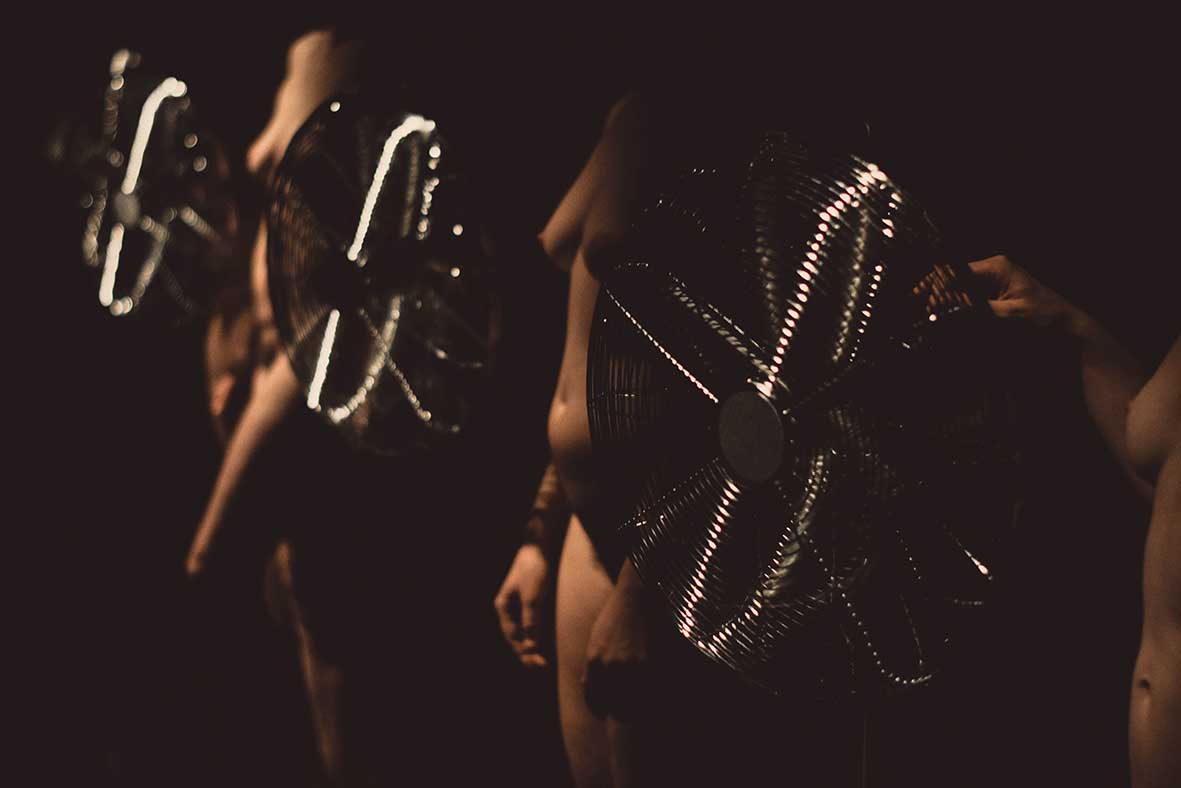
In the whole performance there are references to the nature-culture opposition. Nature is the unity of humanity, while culture, symbolized by metal windmills present throughout the performance and high heel shoes, which at some point put on performers, seems to be an ambiguous force. By putting on high heels, on one stage, for a moment, four become women. Heels are, along with red lipstick, the most stereotypical gender marker. In this scene, the most distinctive in the whole performance, the slogan relax your body and mind comes from off. Performers, as per an agreed sign, begin to dance in front of the windmills blowing their hair. Is it the moment when the body is contextual as a sex-assigned body? Or is it a moment of carefree freedom of four? After all, it seems that in these poses there is a kind of culturally played game. The same windmills, already in one of the next scenes, directed directly at the audience, turn out to be oppressive machines blowing in the cold wind. The scene is changing radically. The context of femininity turns out to be temporary. We see the naked body again – the human body.
Towards the theater of liberating the body
The human body, male or female, shown in the full context of their corporeality, diverse, operating on the edge of their endurance, becoming an object towards themselves, ceases to be the body seen primarily through the prism of sexuality, becoming a symbol. It is a theoretical symbol, both conventional and material, showing that the body is a universal transmitter of meanings and emotions. It is a body released from a cultural corset, moving in an endless cycle of life and death. In this respect, the performance “Four” shows us an old-new story about human life. Saying nothing that we would not have known so far, it reveals the body from the surrounding discourses, claiming this most basic story about a man, which, after all, we easily forget.
Monika Popow, “Śląsk” No. 10/2018 [International Performing Arts Festival A Part, Katowice]
“Four” or incarnate symbol
Where to find answers to fundamental questions? How to explain the meaning of birth and death, the place of man in the world or the eternal laws of nature? Perhaps the truth lives somewhere deep in our bodies, organs, tissues and atoms. The most direct cognition is through bodily activity. To understand the meaning is to update the symbol in motion – this is the subject of the play “Four” directed by Marcin Herich and group choreography of Teatr A Part and the Amareya Theatre.
The title four naked women come out of the darkness with a calm but determined step, aware of their direction and purpose. For a long moment, the audience observes the backside silhouettes against the background of dim light, a motionless row of bodies at the far end of the stage. They gradually come to life, moving towards the viewers in concentration, which gives the impression that the time extends into hours, whole days, years and eras. The hands of the performers work: they slowly and consistently drill through the space, drawing subtle shapes in the air and rising up like stalks of plants. The closer the proscenium, the more details are outlined in women’s corporeality. Muscle tension, skin texture, and joint flexion are revealed. A purely physical image is created, extremely blunt and simple in its biological form. At the very end of the arduous journey through the stage, women turn around in a violent motion. They stand firmly on their feet, open and taut, and their faces say, “I am.” Nudity is not shocking or outrageous – it is a fact, just like presence is a fact. The fact is the matter that builds us and the continuous processes that affect everything that exists.
Performers perform sequences of dynamic actions, chaotic changes of position, which are accompanied by accelerated breaths. Movement hypnotizes, disturbs, generates further question marks. Who are the heroines of the performance? What do their gestures mean? Faces are neutral, deprived of individuality, and thus refer to more universal meanings. The dancers turn to four parts of the world, their bodies are looking for a place for themselves. This search does not take place alone, but entails complex interactions, zooming in and out, attempts to match and position each woman in relation to the other three; tangled limbs, interpenetration of shapes, gluing and splitting forms like the expression of organic matter, creative ferment at the dawn of evolution. Nudity for movement is like silence for sound – it lets you hear the elemental polyphony, experience the primal energy that inhabits our bodies.
What can change the cultural context? Loose hair, high heels, coquettish poses. And four fans – the wind produced by human invention. Women are only seemingly naked, because they are dressed in sex and personal details. Seductive smiles flicker on their faces, glimmers with reflections of emotions. The alluring movement seems to follow some hidden but real intention. Desire? Fun? Irony? You can ask yourself whether we saw (feminine) personalities on stage from the beginning, or only saw them when the characters evolved into subjects of feelings and will, objects of desire, acquired specific identities. What then constitutes about man and what is the border between someone and something? Is our image of femininity only a creation of culture or even a stereotype based on a specific set of behaviors and objects that surround us? And yet the language of nudity, uncensored by the convention, conveys something more that results directly from the softness of the body and facial features – the elusive and suggestive essence of a woman as a person.
Just as it is difficult to say where a person began, it is difficult to know where it will end. In the eyes of the viewer, the performers abandon the attributes of femininity – shoes and movement habitus – to transform into a different form of life. There is a disturbing role reversal, the audience’s attention is focused on the work of fans, while women unknowingly adapt to their steady rhythm. The vitality and dance charm seen earlier dies in the mechanical noise of the propellers. The sounds produced in this way, repeatedly cutting through the air, slowly spread the inevitable emptiness around. In place of pulsating bodies, large sheets of foil appear, which ripple in dense mass, covering performers from head to toe. The women, shrouded in plastic, finally go to the back of the stage, dragging behind them plastic veils like a strange wedding ceremony. Marriage with the future is also a burying of the past – each subsequent incarnation is the irrevocable end of the previous one.
In “Four” Herich he makes an artistic attempt to capture the world as a whole, to reach the sources of existence, order and change. The symbolic geometry used by the choreography (rows, squares, diagonals) oscillates between linear and cyclic time, between irreversible change and repetition. The situation is governed by the logic of myth, woven from metaphors and poetic impressions. It is an impression that does not bring intellectual understanding, but allows you to feel part of the cosmic order, an indispensable element in the universe of things and phenomena.
Maria Pastwa, taniecpolska.pl, 1/10/2019 [Polish Dance Platform, Gdańsk]
Subjectively about the performance “Four”
Alternative Theatre, or more precisely the dance and body theatre represented by the artists, is not as common and easy to interpret as works performed on the stages of drama theatres. What emotions does a viewer encounter when just getting to know this world?
Let’s start from the beginning. I was quite afraid of the performance. Not because I was afraid of seeing something so bold on stage, I was afraid of my reaction to contact with the naked body of a stranger. In all the confusion, however, I did not think about the fact that the relationship that develops between the actor and the viewer is something close and intimate enough to receive the content of the performance with concentration.
When we entered the Big Stage of Toruń’s Od Nowy (the room is transformed many times during the festival!), four actresses were already taking their seats. One could notice the minimal number of props – four chairs, four air fans, four bodies. The performance began in total silence. When the actresses took their places, with their backs to the audience, everything began. Their bodies, against the backdrop of a magnificent white canvas, began to create an image. The actresses’ movements were similar, but not identical, which began to arouse the first reflections.
Isn’t it true that we all start life the same way? We go into the world, some with a “better” start, others with a “worse”. However, we all march along the same path, the path leading to death.
This comparison is closest to my sensitivity, and (I hope) to the director’s vision. The play “Four” develops like life – first we slowly get to know the actresses, then we see their struggles with pain (both mental and physical, as we witness a situation in which the heroines hit their own bodies with their hands for about a minute). When the first stage of pain had passed, the women began a beautiful dance, in which it seemed that the four bodies formed a unity on the stage.
This is just the beginning of this unique experience, but I can already recommend it to the brave – and especially to those who do not treat the human body as a taboo subject.
The acting perfectly harmonized with the music and lights, which, depending on the scene, took on a different shade. Thanks to this, the most important prop of the show – the human body – changed enough to be understood each time in a different context.
When the show ended, I stayed to listen to the meeting with the director Marcin Herich, as well as one of the actresses, Katarzyna Pastuszak. It was interesting how many interpretations appeared among the audience, some noticed, mainly, female subtlety and love, while others saw anger and the struggle of man in the modern world. It also turned out that the creators themselves interpret their work in different ways, but they emphasized that each form of understanding their art is correct.
I rate the experience as very successful, it contributed to the fact that I look more favorably at the world of body theater, as well as the phenomenon of performance itself. With a clear conscience I can recommend the show “Four”. I hope that after watching, many women and men will start to look at their bodies differently. Maybe we will finally believe that we are walking works of art?
Oliwia Ciszewska, www.sfera.umk.pl, 9/10/2020 [Alternative Theatre Meetings Klamra, Toruń]
Crippled Beauty
Four women hidden in the darkness of the stage, four windmills nearby. You can feel the stuffiness of expectation in the air, everything still seems to be completely hidden from the audience. Suddenly, with music reminiscent of an idyllic melody accompanying the movement of a child’s carousel played backwards, the naked bodies of dancers appear. At first, we only see the movements of their hands, but even this can seem disturbing. It is far from the joyful beauty of contemporary dance or ballet. Instead, it seems crippled, broken, anachronistic and individual to each dancer.
The performance was created thanks to the cooperation of Teatr A Part and Teatr Amareya, directed by Marcin Herich. The latter group is famous for its inspirations from contemporary dance, the use of body art and butoh. The influence of “dark dance” in the entire work, its concept and description is very clearly outlined through imperfection. In accordance with the butoh concept, the artists strive to show the truth of their experiences, the greatest possible naturalness and sincerity of their movements. On stage, they embody their own bodies, which they communicate through nudity and motionless facial features. They constantly play with them, pat them, throw their limbs up, look for their own place on the stage and intertwine them in a joint movement to the sounds of music similar to the roar of distant thunder. What other sound seems more natural, terrifying and ancient to us? At the climax, they freeze, and their movements slow down again, trying unsuccessfully to finish, to explode once again in the next scene. And in all this, moments of shameless, as if vulgar femininity. However, they are not caused by nudity, but rather by the boldness of the movements, the moment when the dancers/performers approach the audience and aggressively place four chairs in front of them, revealing themselves fully for the first time. As if they were trying to say: Look at me now. I am not a shamefully hidden object of desire. I am a living movement, the very wildness of nature, a blazing fire. Will you dare to look at me differently? They only emerge from their stony role for a moment when they vertically set up fans, let down their hair, put on high heels and start to writhe charmingly, and even (oh my!) smile. Once again, they mock the audience and the image of a woman, which for the first time is probably starting to resonate in our heads with familiar notes. After all, it is familiar to us, such an image we constantly carry in our heads – encoded by culture. The general character of the performance seems to be a play on femininity, regardless of culture, associated more with nature than civilization. The ending is mysterious and beautiful, when the artists put on plastic sheets like funeral shrouds or wedding veils and, lifted by a gust of air, encourage their bodies to move in accordance with it, to put dead veils on their shoulders and in the fading darkness approach the red ball of the sun, departing in the twilight. The performance is over, the actresses go on stage to say goodbye to the audience. They hold plastic sheets, covering most of their bodies. Their dance has come to an end, now they are just ordinary craftsmen of their own art, so they do not want to exhibit them. Now they are no longer ours, and back to theirs. We should thank them, applause rings out. It was worth seeing this performance.
Andrea Guźlecka, Kurier festiwalowy 2/4, 8/10/2020 [Alternative Theatre Meetings Klamra, Toruń]
Chaos that gives birth to Woman
Consciously limiting and reducing the choice of theatrical means to props (fans, chairs, film), movement and silence, the authors of the performance achieve a maximum of content through fragments and combine these means in a number of combinations. In doing so, they communicate with the audience using a specific theatrical language and create a marvellous stage reality in which different meanings are interwoven, but which will only reach its full expression and clarity in the sequel, “Four More”. Suggestive and simple stage signs realise the poetic core of this idea in “Four”.
Stela Mišković, Portal Analitika, 12/0/.2023 [Festival Internacionalnog Alternativnog Teatra FIAT, Podgorica, Montenegro]
Photos: Agnieszka Seidel-Kożuch
open gallery view video